Panther Pond Camp
PROJECT TAGS
LOCATION
BUILDER
PHOTOGRAPHY
Cost
Year
The property is an iconic Maine lakeside lot; relatively small, south-facing an existing single-story camp built in the 1950’s.

Transforming a 1950s Camp
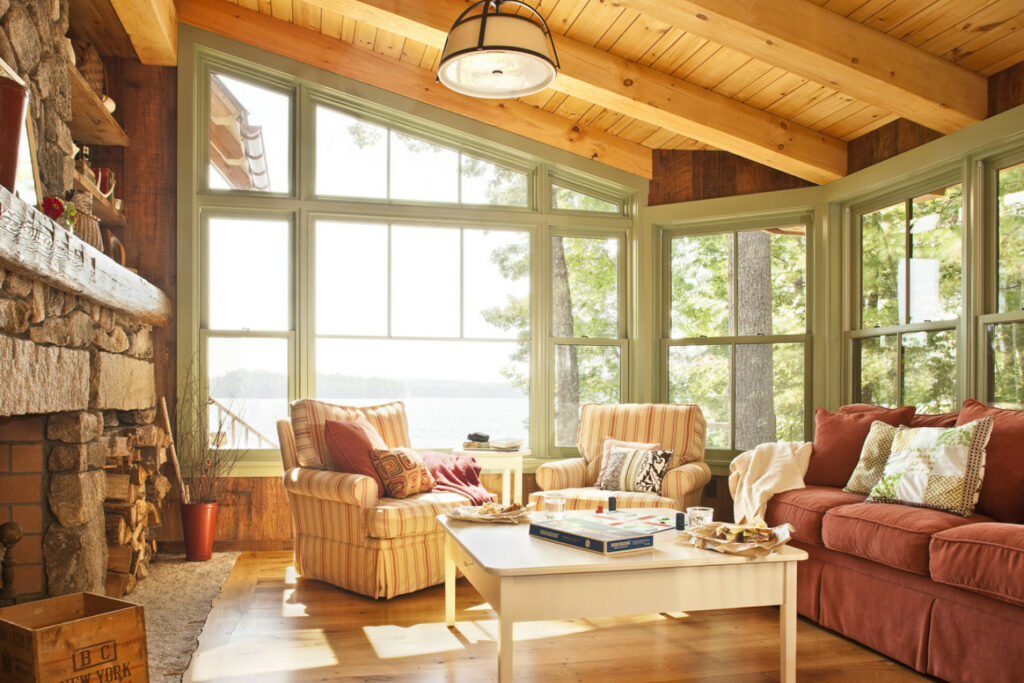
The project involved transforming a small, dark 1950s lakeside camp into a bright, spacious retreat for a young family. The primary goals were to enhance views of the lake, improve natural lighting, create more social common areas, and provide additional private bedrooms while adhering to strict volume and site coverage limitations due to the small lot size and proximity to the water.
Locally Sourced Pine
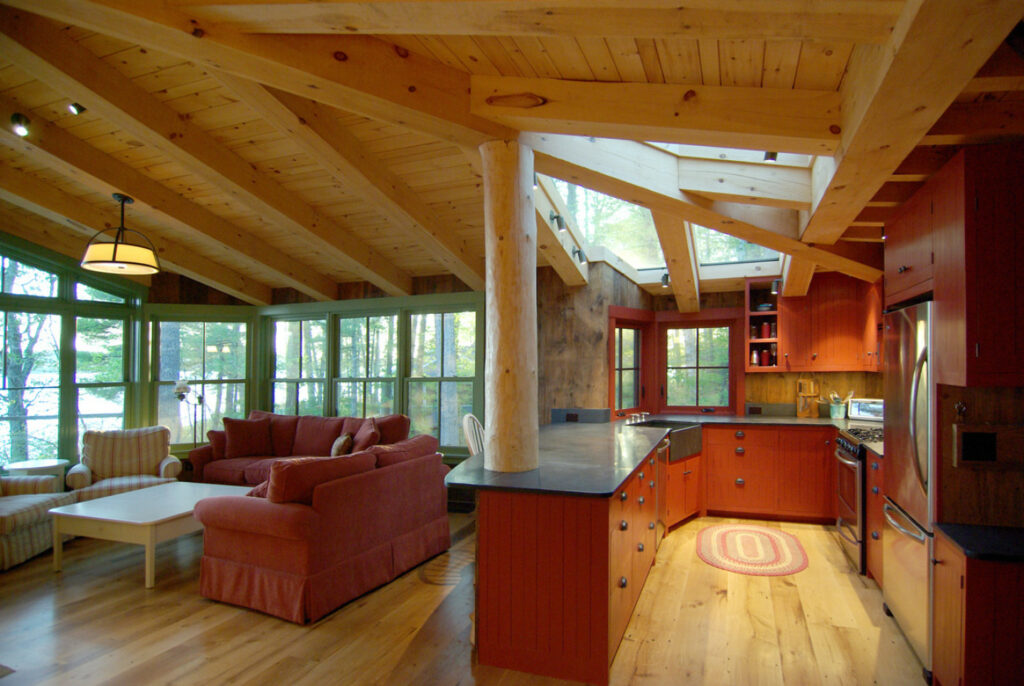
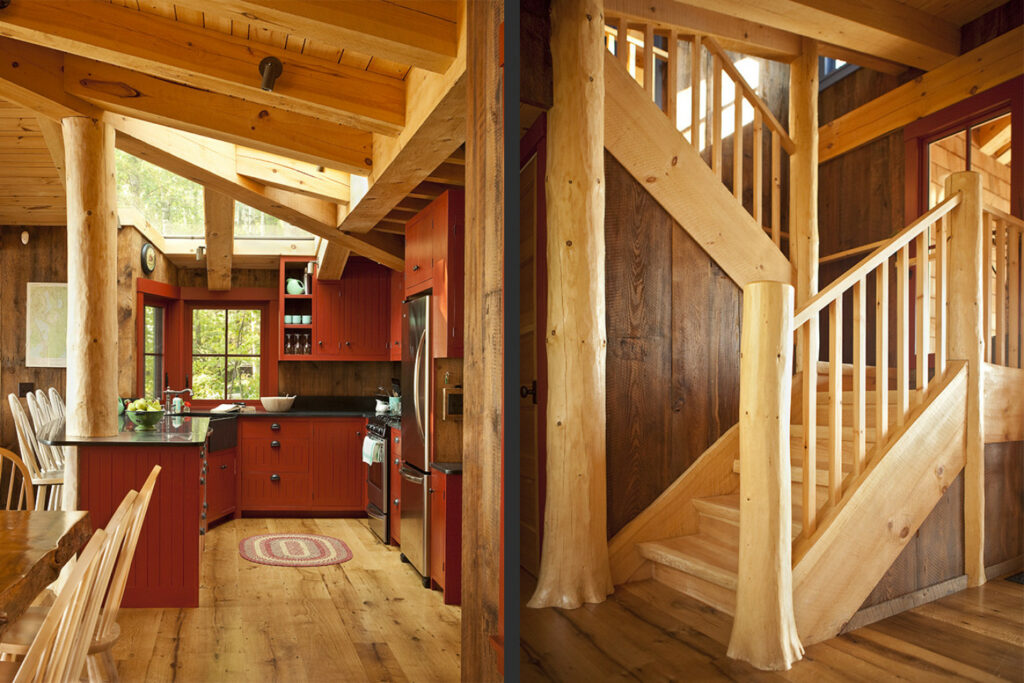
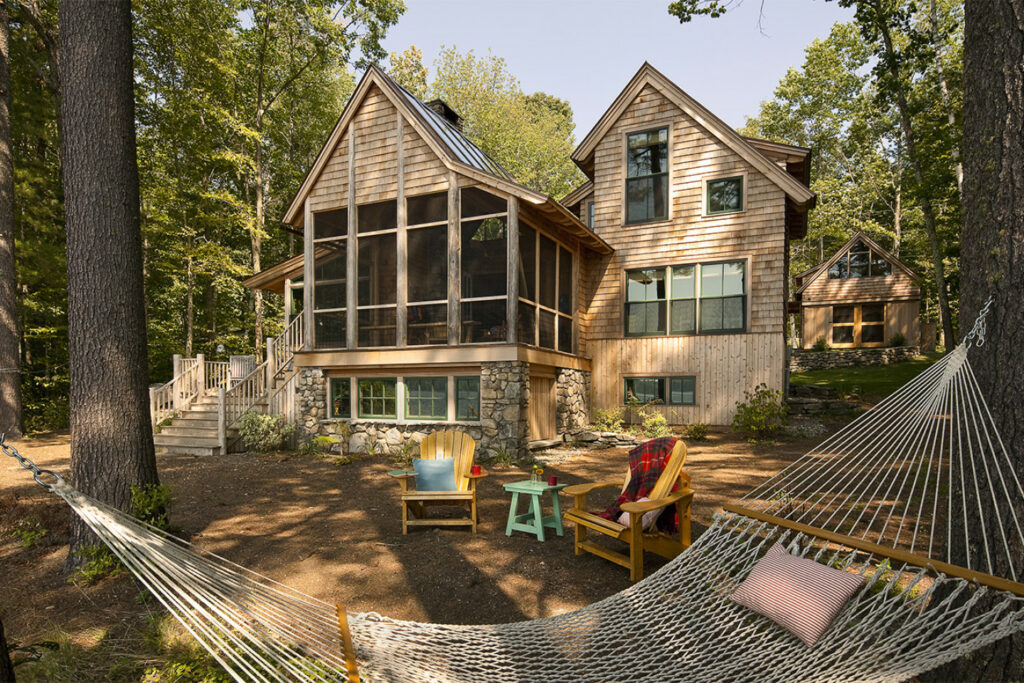
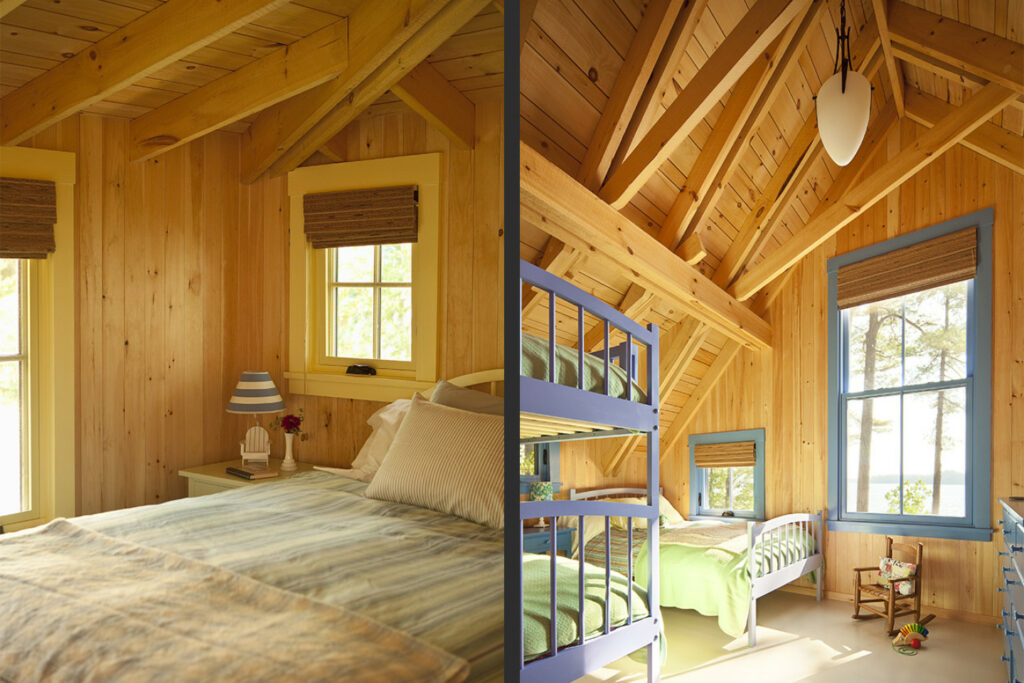
The camp’s visible structure and finishes were meticulously crafted using pine logs, timbers, and sheathing supplied by local mills and woodlots. The materials were carefully detailed and assembled by a skilled team of craftsmen, ensuring that the camp’s rustic character and connection to its natural surroundings were preserved.
Maximizing Space and Light
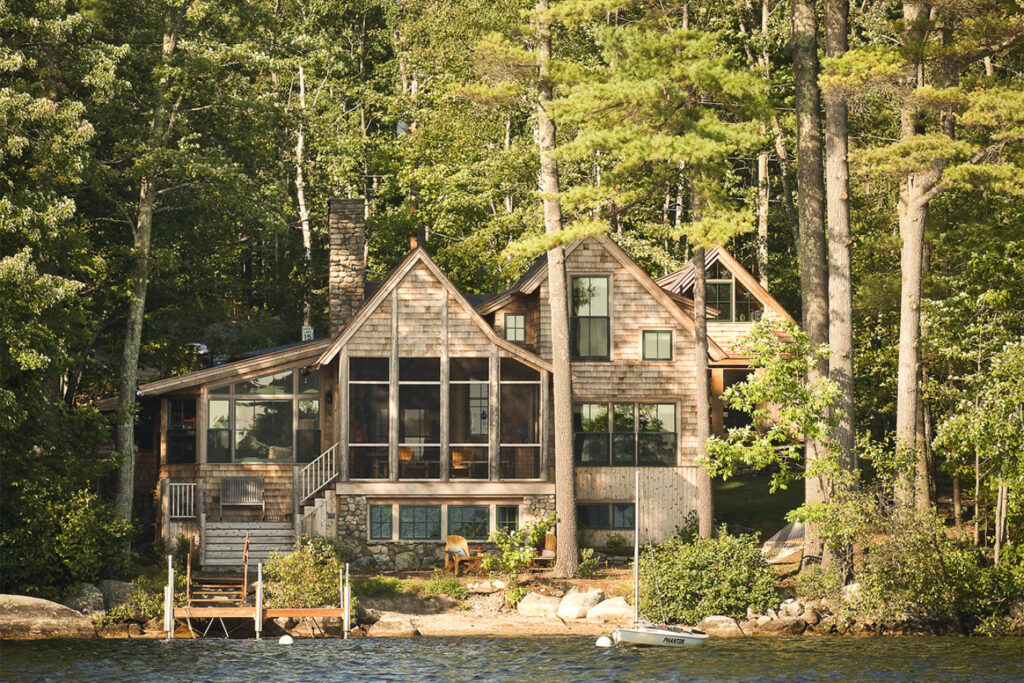
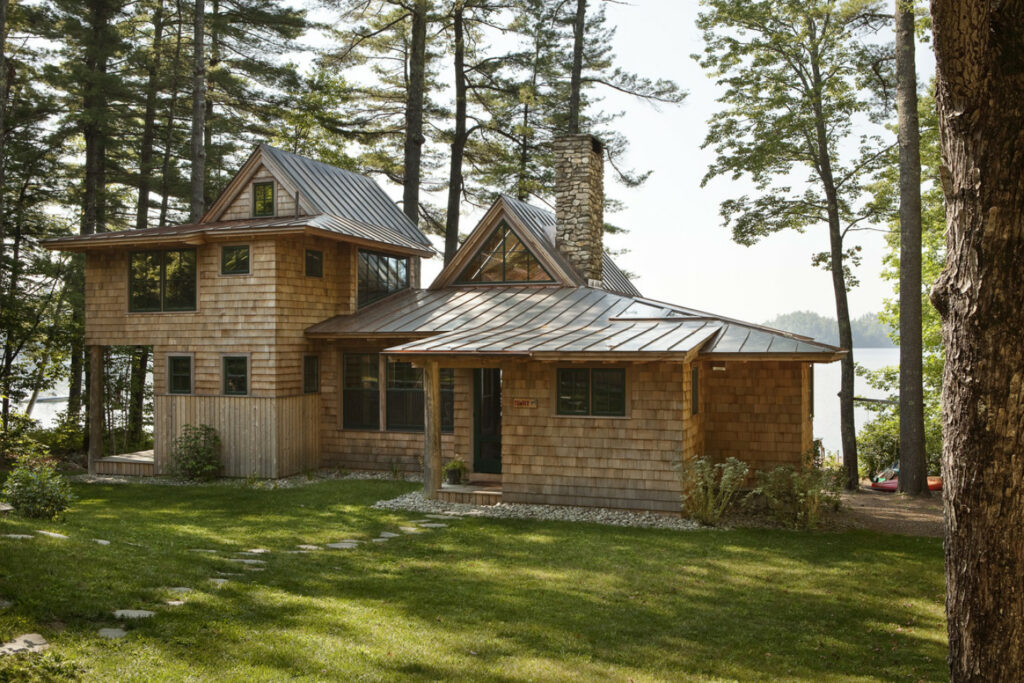
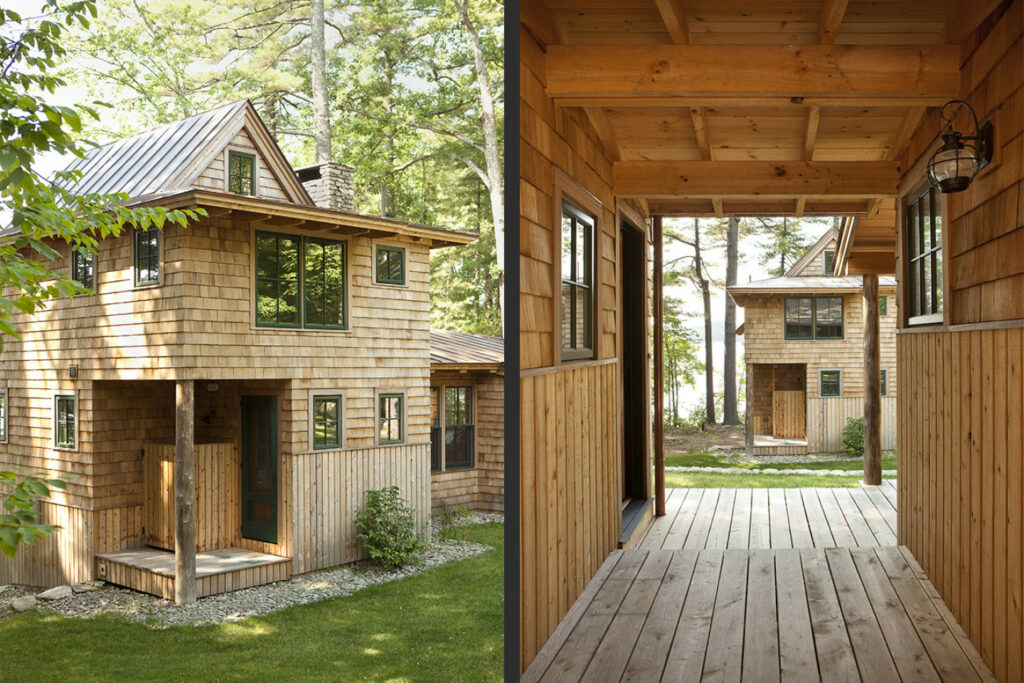
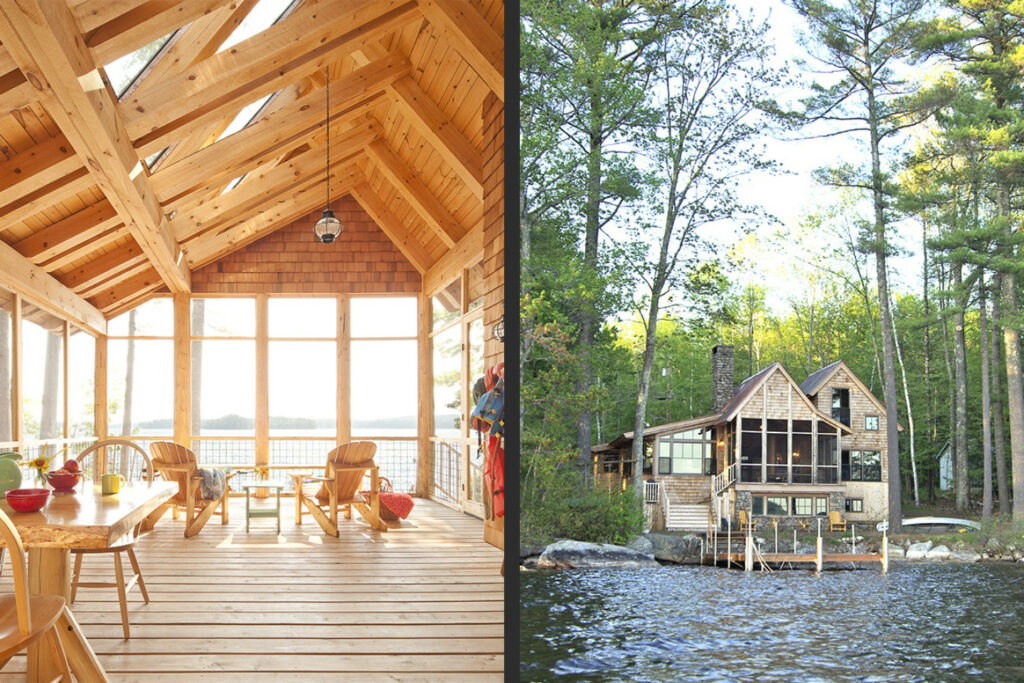
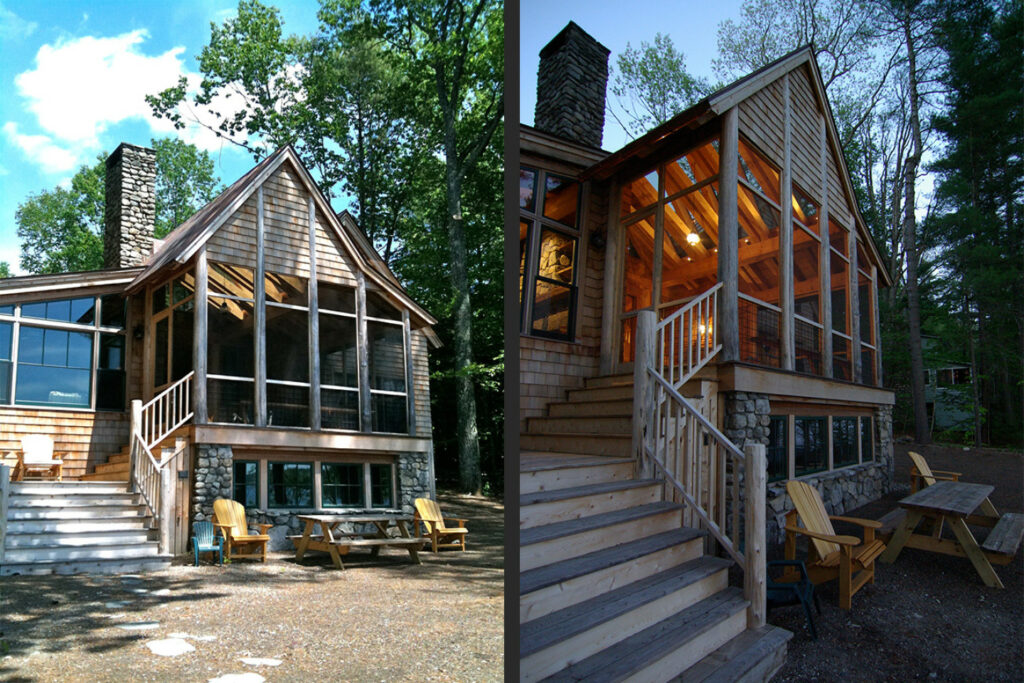
After much deliberation, the decision was made to remove the existing camp and rebuild it in its place. Due to the small lot size and proximity of the existing camp to the water, the volume, square footage, and site coverage limits of the new structure would define the project. To make the most of the limited volume of the new building, many roof pitches were kept low and shallow, tethered to two taller, traditional gable forms. Inside, the structural roof beams and rafters were left exposed, to maximize headroom and the perception of openness in the rooms.
On the water side of the camp, a large screened porch was added which serves as an open courtyard to the other rooms of the house. To keep the screened porch from obscuring the daylight to the rest of the house, the southern roof plane was sheathed almost completely in oversized glass panels, flooding the porch and adjacent living areas in sunlight.
Overcoming Site Constraints
The camp was tiny and dark, with obstructed views and poor access to the water.
The Results
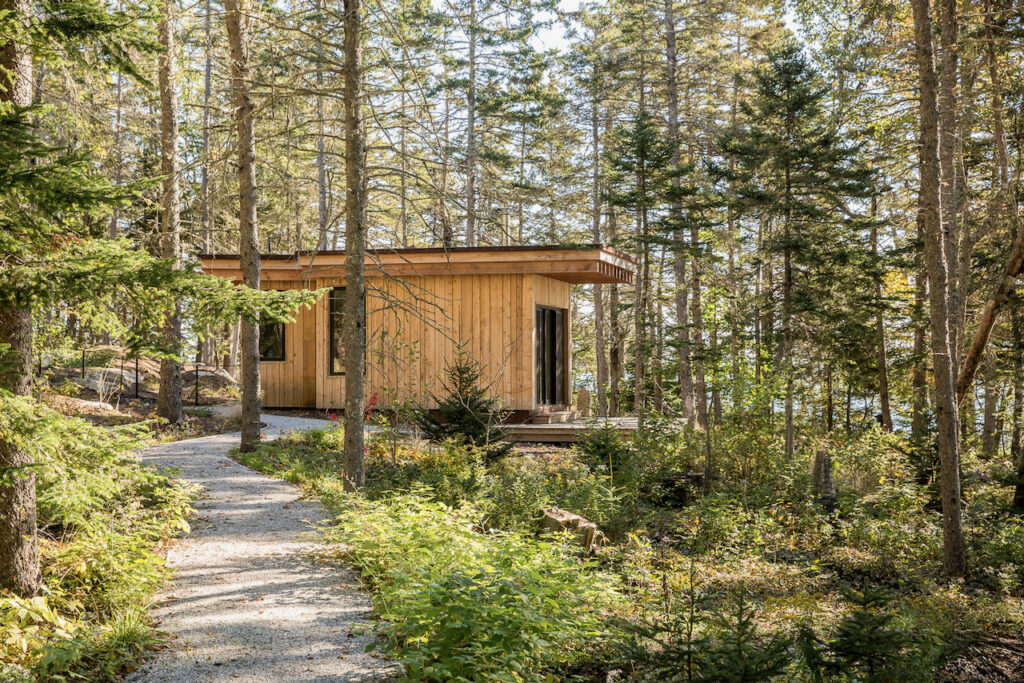
On the uphill side of the lot, a small garage, home office, and two-bedroom guesthouse were built; this gave guests a quiet, secluded place to stay while visiting but also served as a privacy screen between the road and the main house. The garage was built with large sliding doors and screens on both ends so that it could double as a ping-pong or play space for a house full of children on dark and rainy days.
The visible structure of the camp and finishes throughout were carefully detailed and then painstakingly fitted and assembled by a skilled team of craftsmen, using pine logs, timbers, and sheathing supplied by local mills and woodlots.