Big Boulder Camp
PROJECT TAGS
ARCHITECTS
LOCATION
LANDSCAPE ARCHITECTS
BUILDER
PHOTOGRAPHY
Whitten Architects project
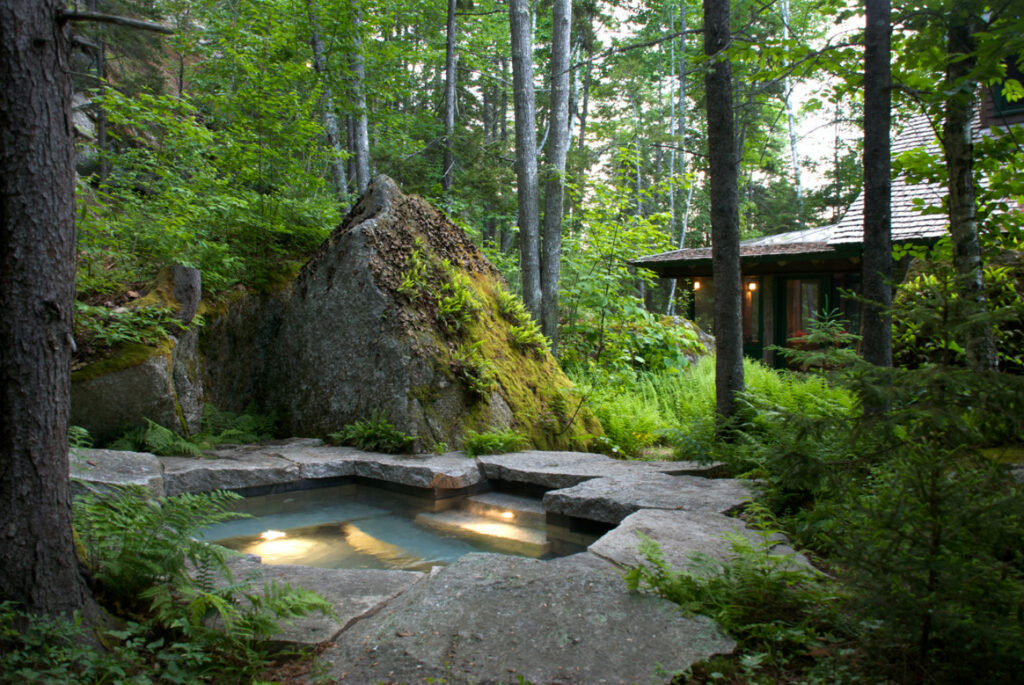
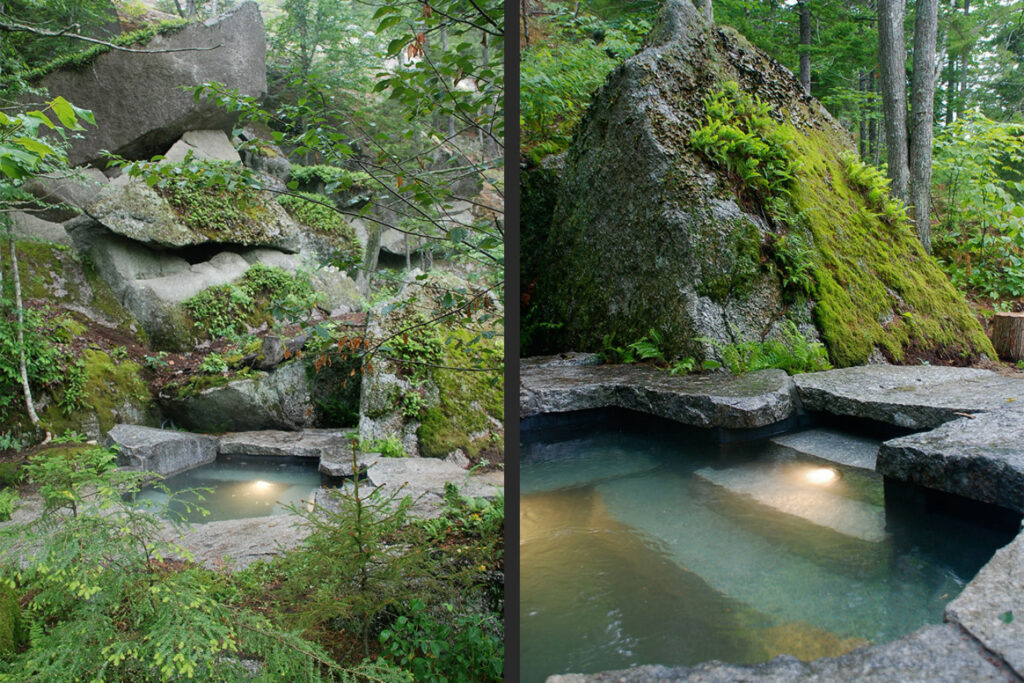
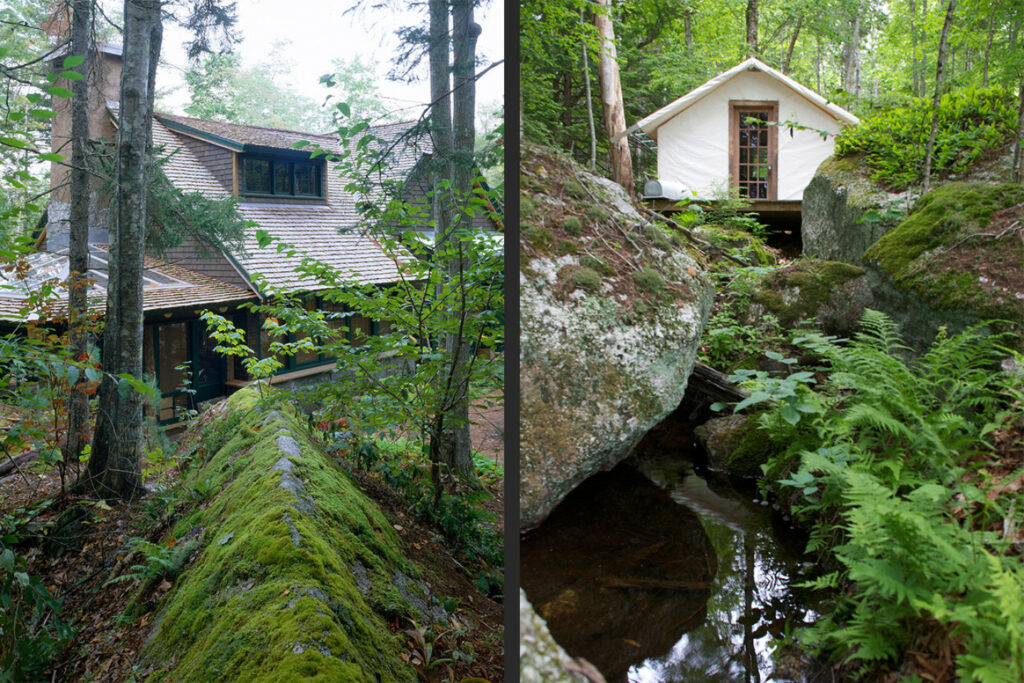
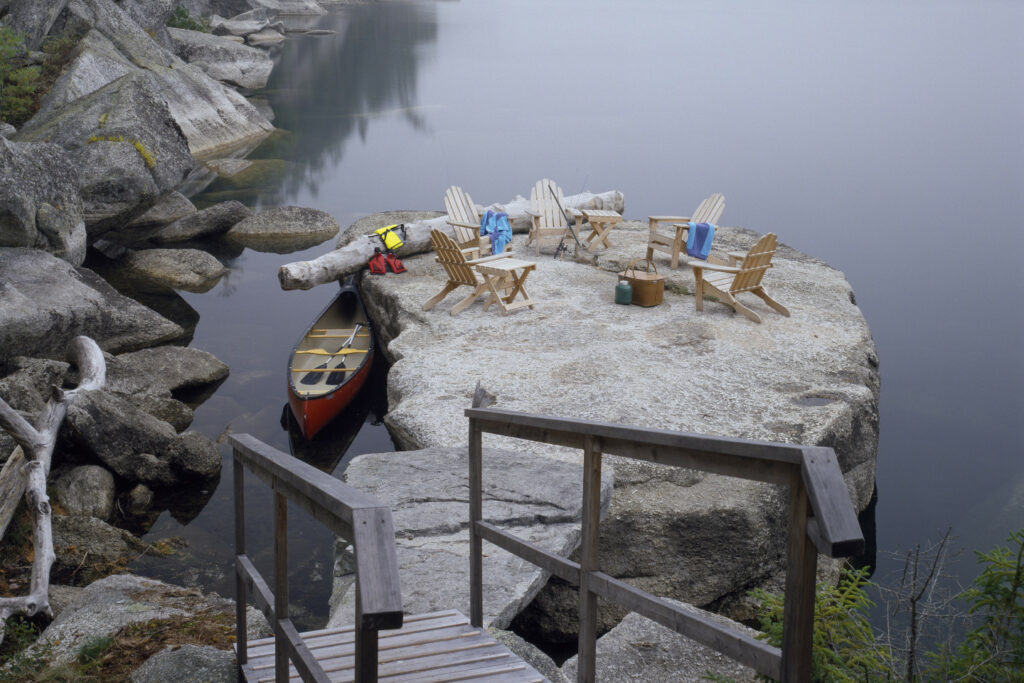
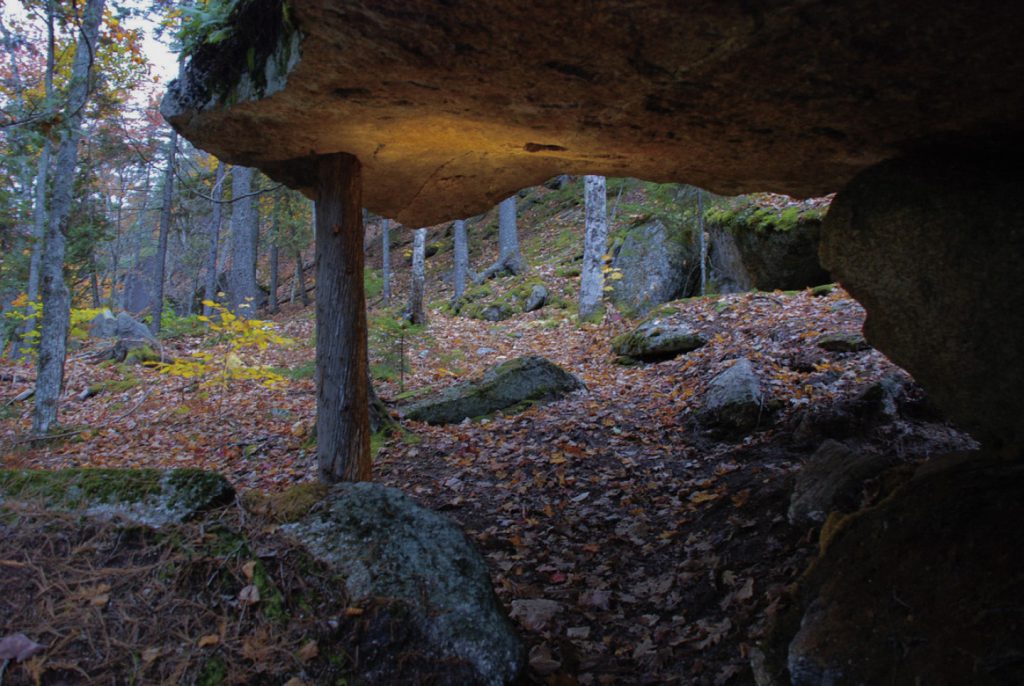
A heavily wooded lakeside site, with north-facing views and dramatic adjacent cliffs strewn all about the site, is massive, weathered boulders, the size of cars and trucks.
15 acre homestead turned Net-Zero artist’s residence
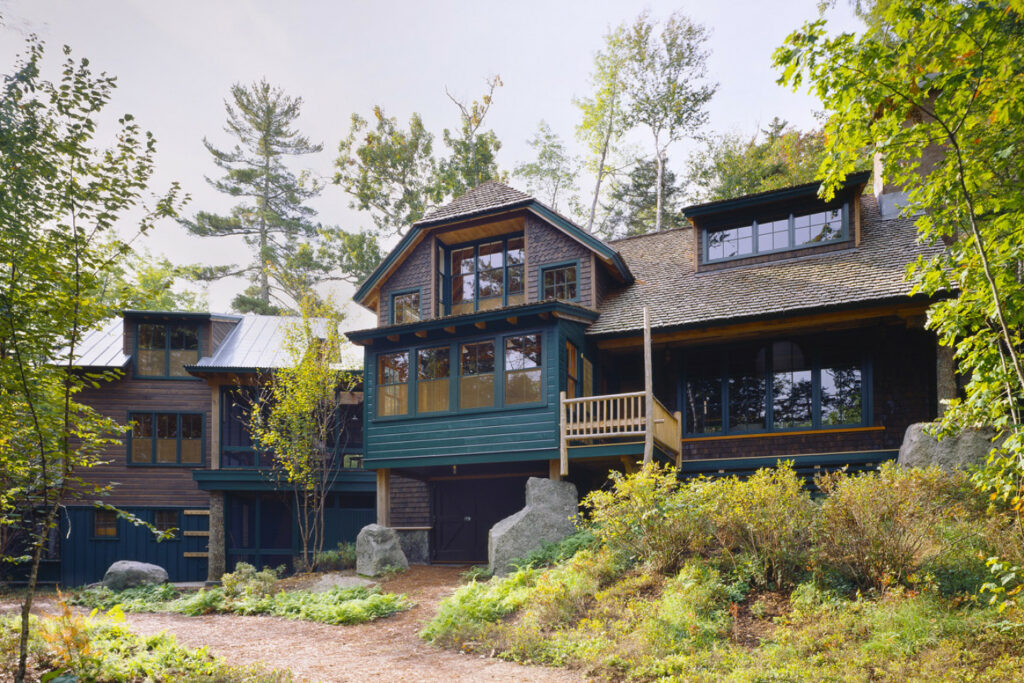
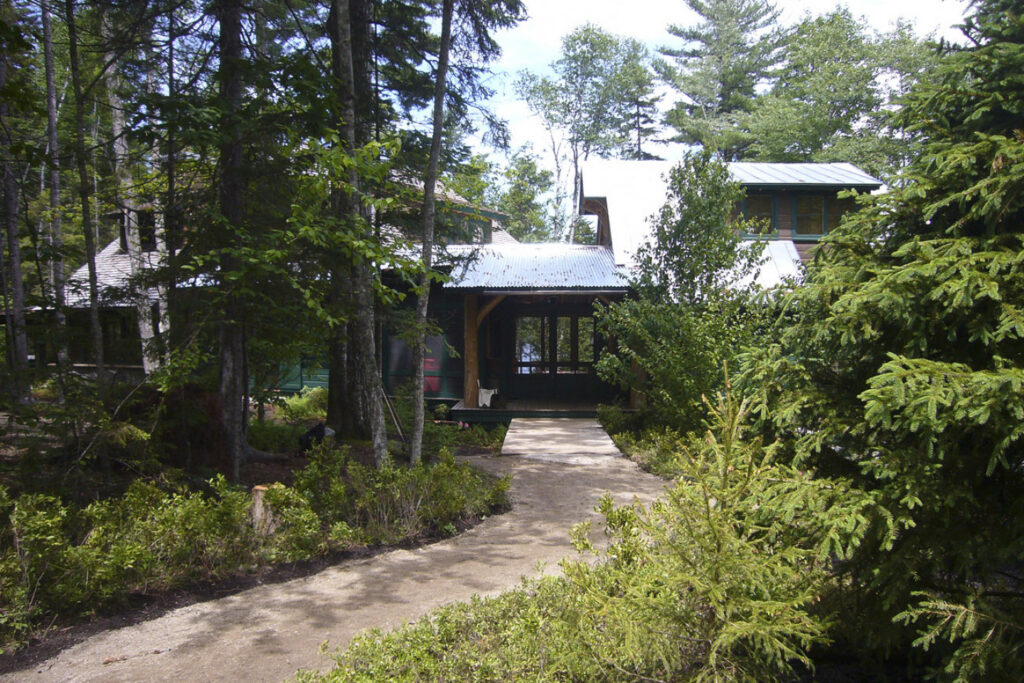
A camp with a deep woods “feel”.

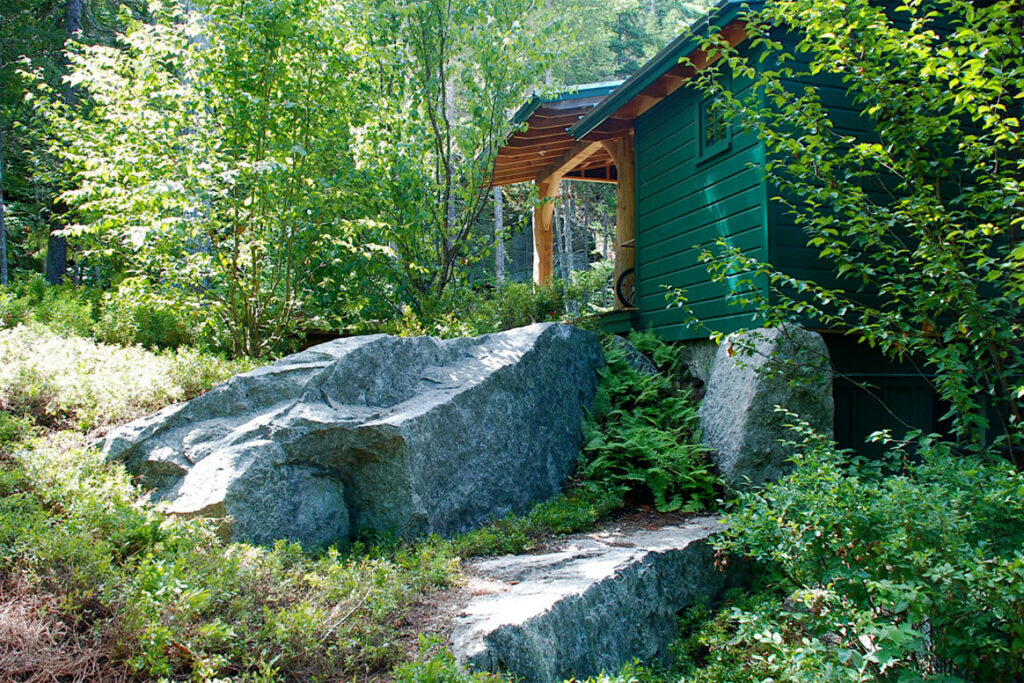
Tucked in among the trees.
Deep Woods Escape
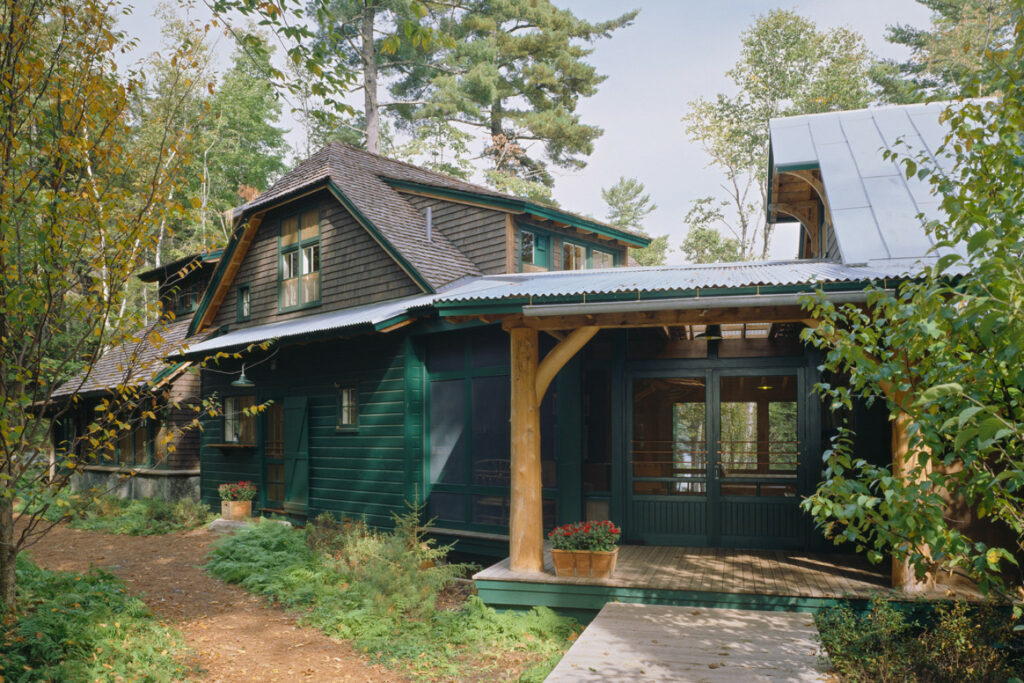
A Traditional, 3-season camp for a couple with 4 children; 2 additional families visit frequently AND need to be accommodated (approximately 20 people total). The clients wanted a camp with a deep woods “feel” that fit into the site as if it has been in place for generations. Daylighting was important, and the camp needed to be easily secured for coming and going and seasonal protection.
Bedrooms: master suite, two guest suites, and two bunk rooms (one boy’s room, one girl’s).
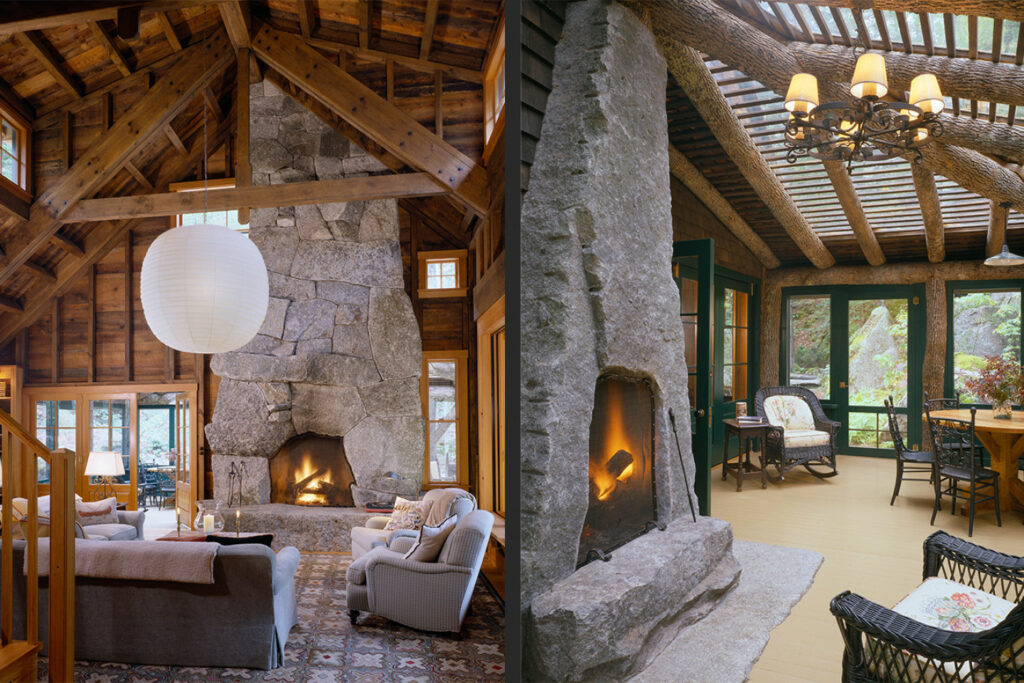
Living room: (expandable: a family of 6, or up to 20) with a stone fireplace.
Dining room: intimate for a family of 6 AND expandable to seat up to 20.
Kitchen: walk-in refrigerator, commercial dishwasher, 8-burner range.
Screened porch(s), Sitting porch(s), Sleeping porch(s).
Mudroom, Laundry room, Linen closet, Office alcove, Recreation room.
Fast-track, design/build process.
Adding a Rustic Touch
Stone
Used for the fireplace in the living room, adding a traditional and rustic touch to the space.
Screening Material
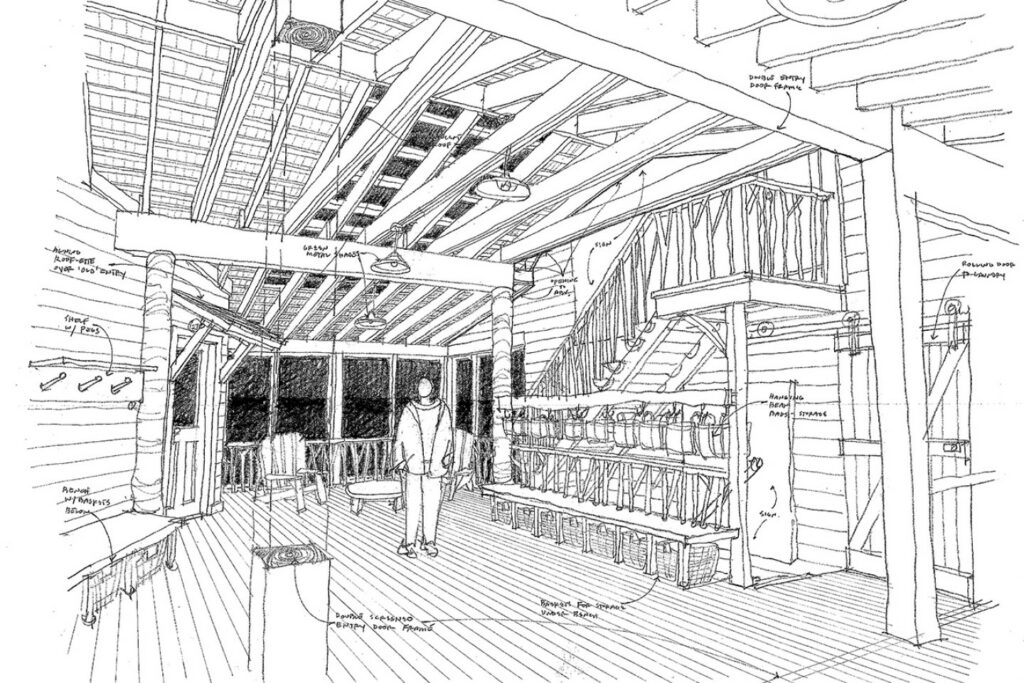
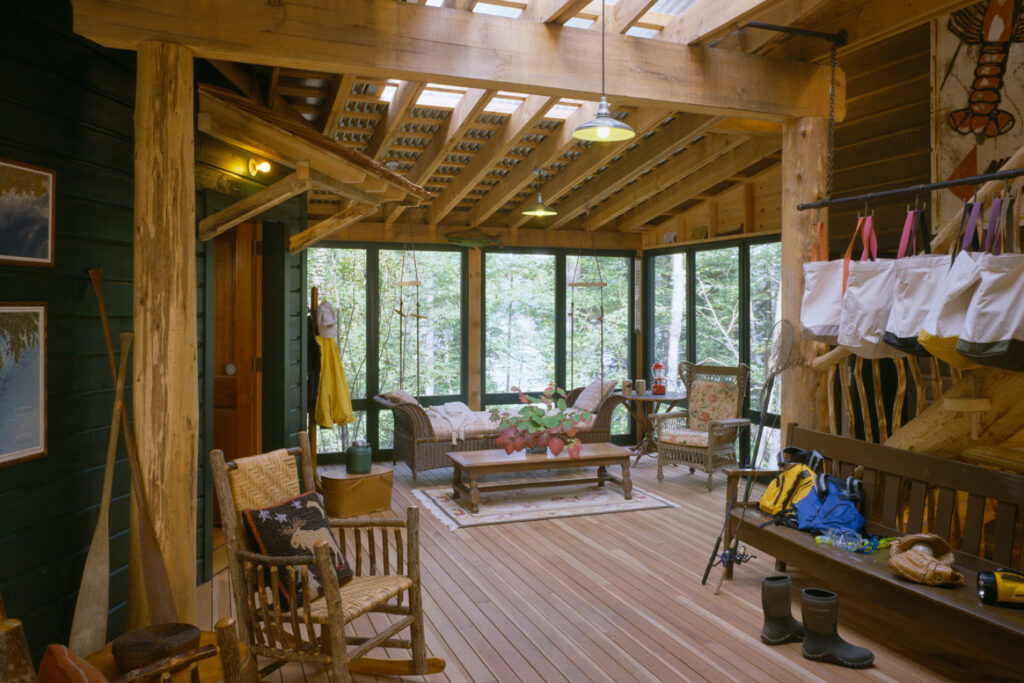
Applied to the porches to create a roofed and screened central mudroom/entry, providing both protection and visibility.
Wood
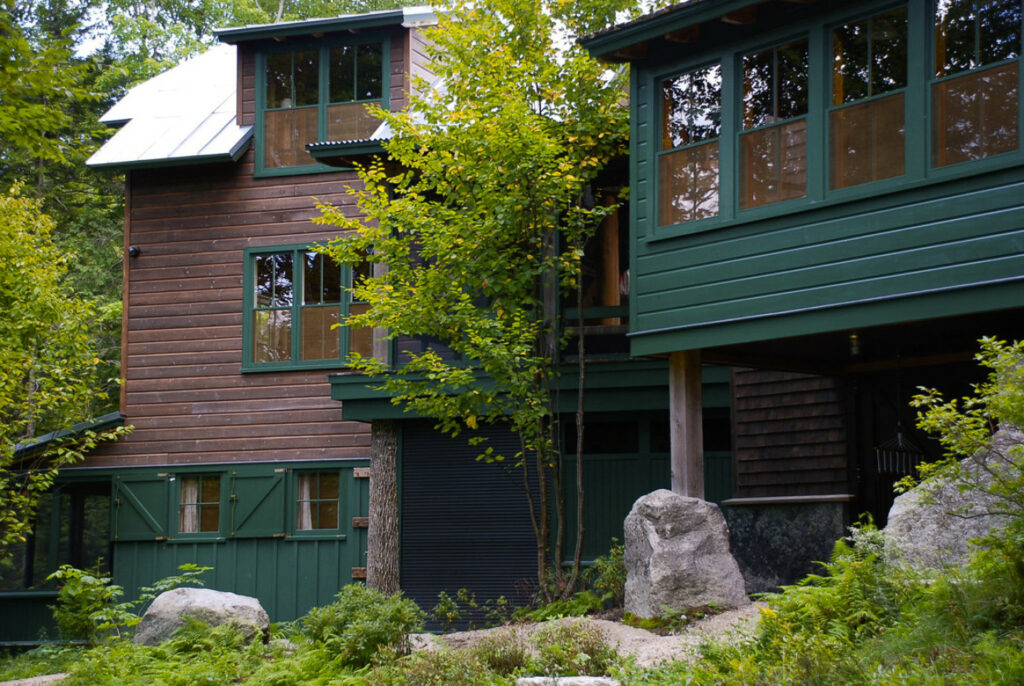
Implied throughout the design to maintain a “deep woods” feel, likely used for structural elements, porches, and interior finishes.
Daylight Basement Materials
Likely concrete or similar durable materials were used to construct the basement, ensuring integration with the landscape.
Motorized Security Shutters
Installed over-screened porches for ease of securing the camp, likely made from metal or weather-resistant materials.
A Visual Link to the Pond
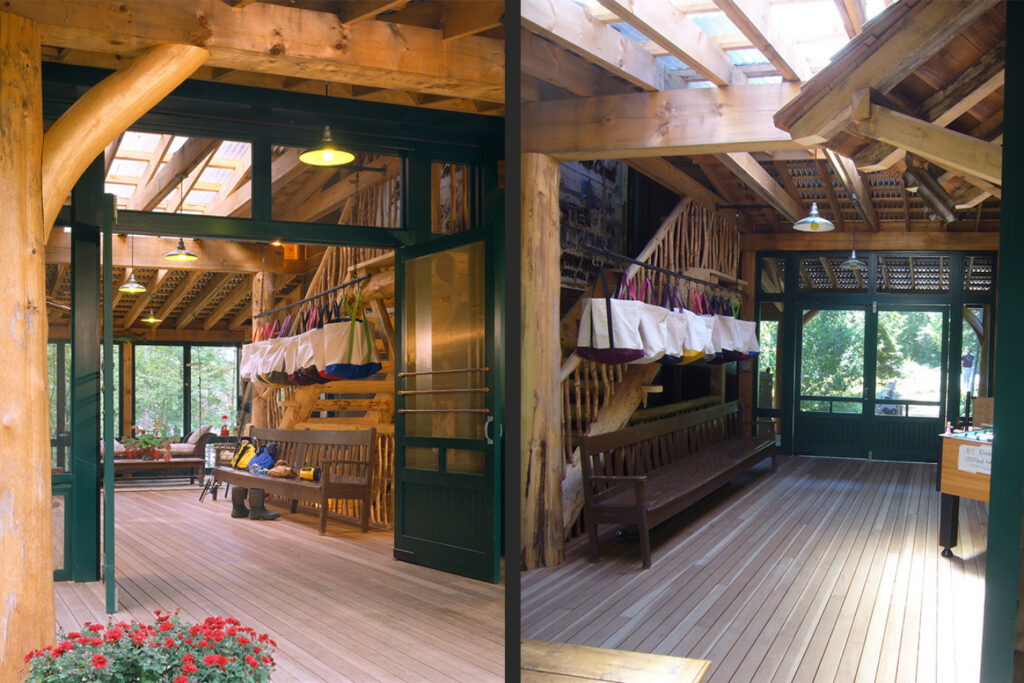
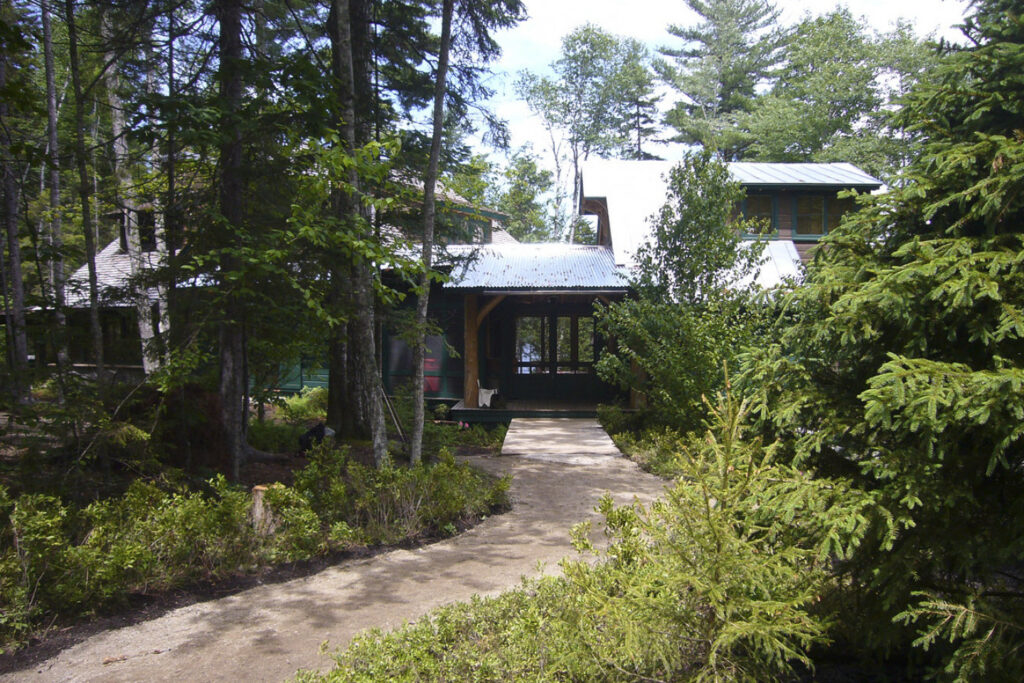
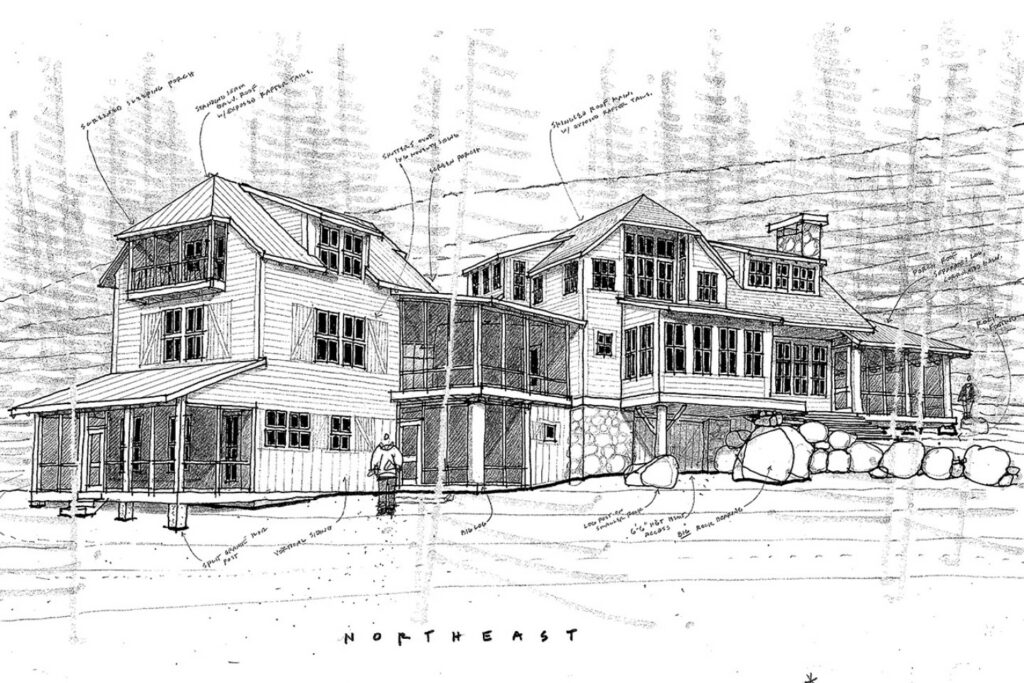
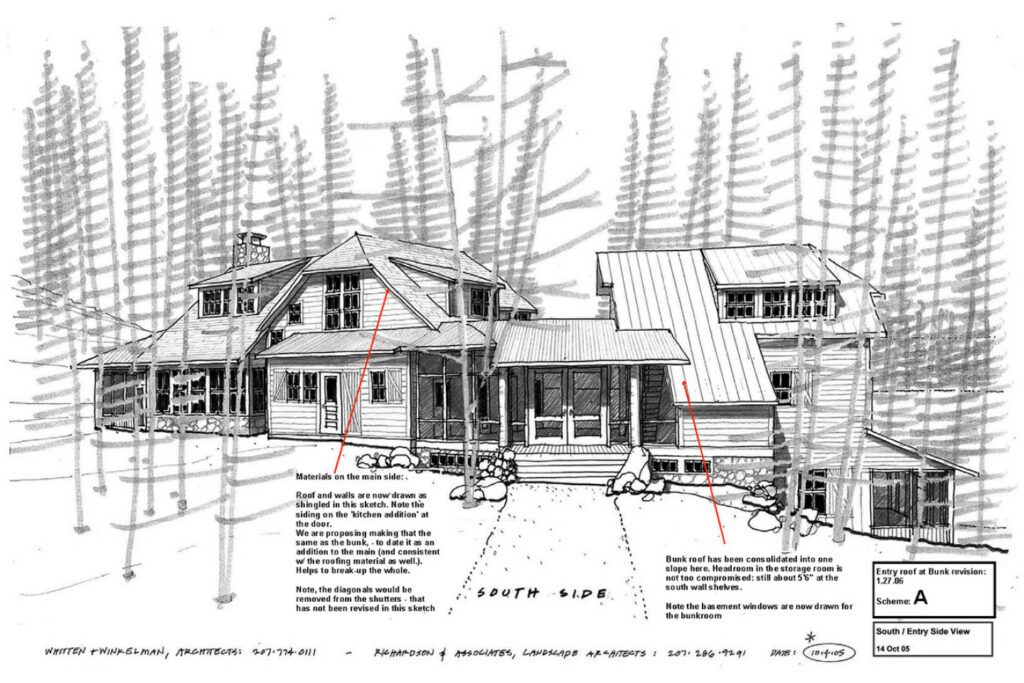
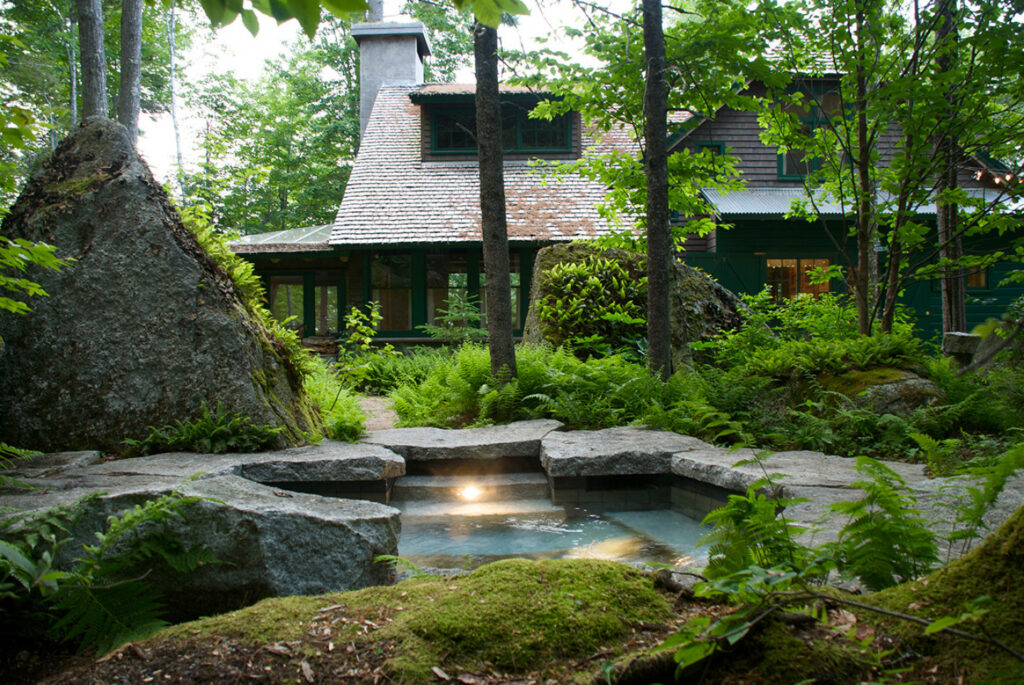
To diminish the visual mass of the whole, the program was broken into two parts; a ‘main’ side building and a ‘bunk’ side building. The space between the two pieces was roofed and screened as a porch and serves as a central mudroom/entry. This space between the masses frames a visual link to the pond in distance, on an axis with the auto arrival/drop-off circle.
Entry circulation can flow straight down and out, through porches toward the pond, reinforcing the user’s link to the landscape. Different materials are used on each ‘side’ to further break up the mass of the whole and tell a different story with each. To further reduce the amount of “sprawl” in the landscape, a daylight basement was created and used to house bunkrooms, baths, and utility rooms. Motorized security shutters were inconspicuously integrated at the ‘main’ side openings and over-screened porches for ease of securing.
Complex Site and Program
Managing the Complex Site Conditions: Integrating the camp into a heavily wooded, lakeside site with massive boulders and cliffs while preserving the landscape.
Accommodating a Large and Flexible Program: Designing flexible spaces for up to 20 guests, maintaining a “deep woods” feel, and ensuring fast-track construction.
The Results
The design harmoniously integrates a rugged lakeside site with massive boulders and cliffs, creating a flexible camp that accommodates 20 guests, maintains a “deep woods” feel, and minimizes visual impact through thoughtful architectural solutions.