Downeast Coastal Residence
PROJECT TAGS
LOCATION
LANDSCAPE ARCHITECTS
STRUCTURAL ARCHITECTS
BUILDER
PHOTOGRAPHY
Project Team
Cost
Year
Our client is a sound artist who works predominantly with 'nature sounds' and is a Buddhist.
15 acre homestead turned Net-Zero artist’s residence; AIA Maine Award Winner
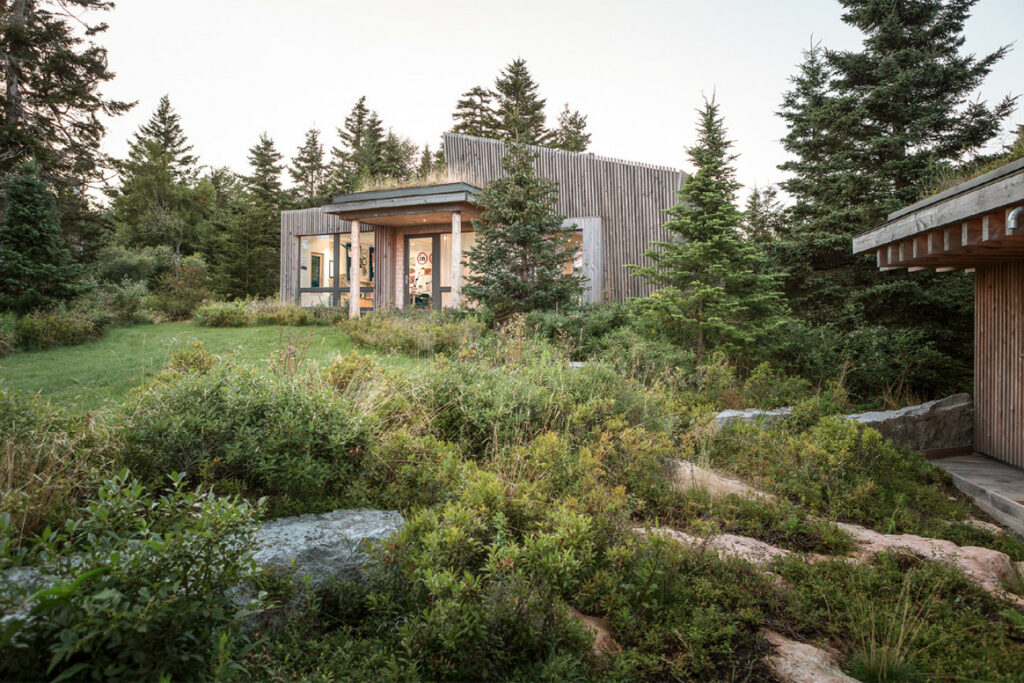

Sound Artist’s Modest Retreat
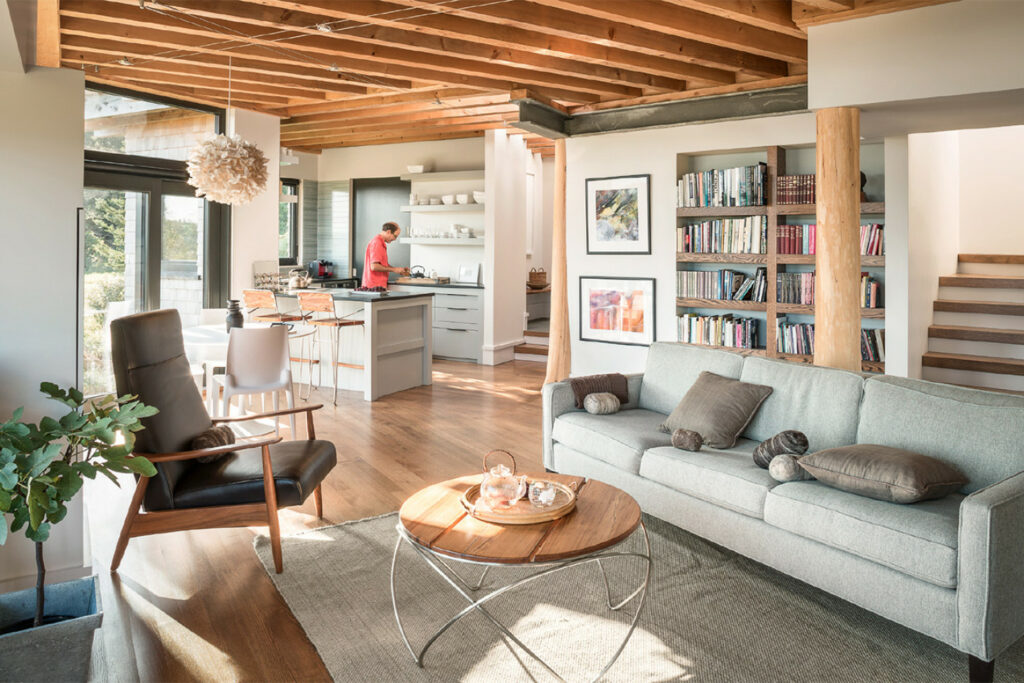
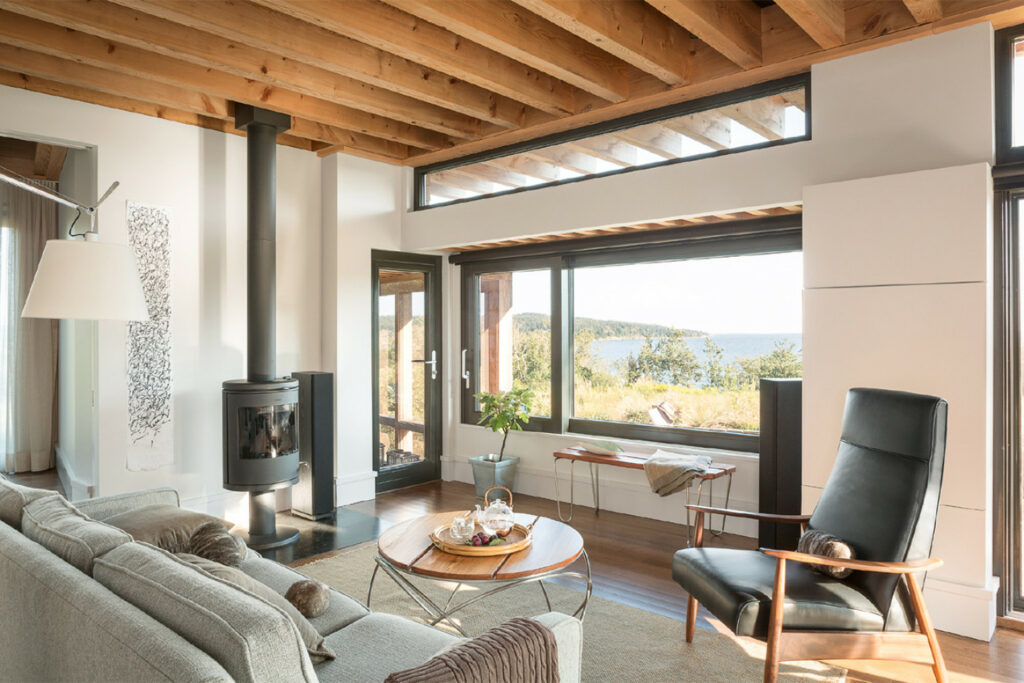
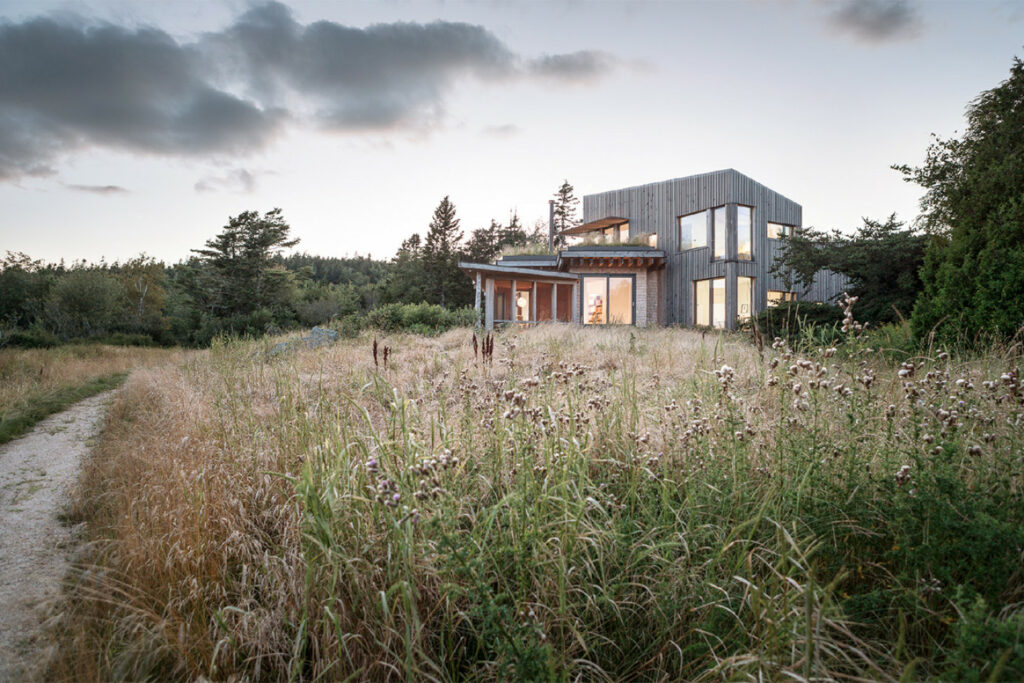
The building program was for a modest 2-bedroom (1700 sf) year-round residence with a detached art studio (900 sf) and a one-car garage. The site is a 15-acre former homestead in Downeast, Maine. It is beachfront on a bay with sweeping southerly views of Petit Manan Lighthouse. It feels very Downeast with spruce woods and lichen-covered ledge outcroppings. An orchard and field roll down to the beach.
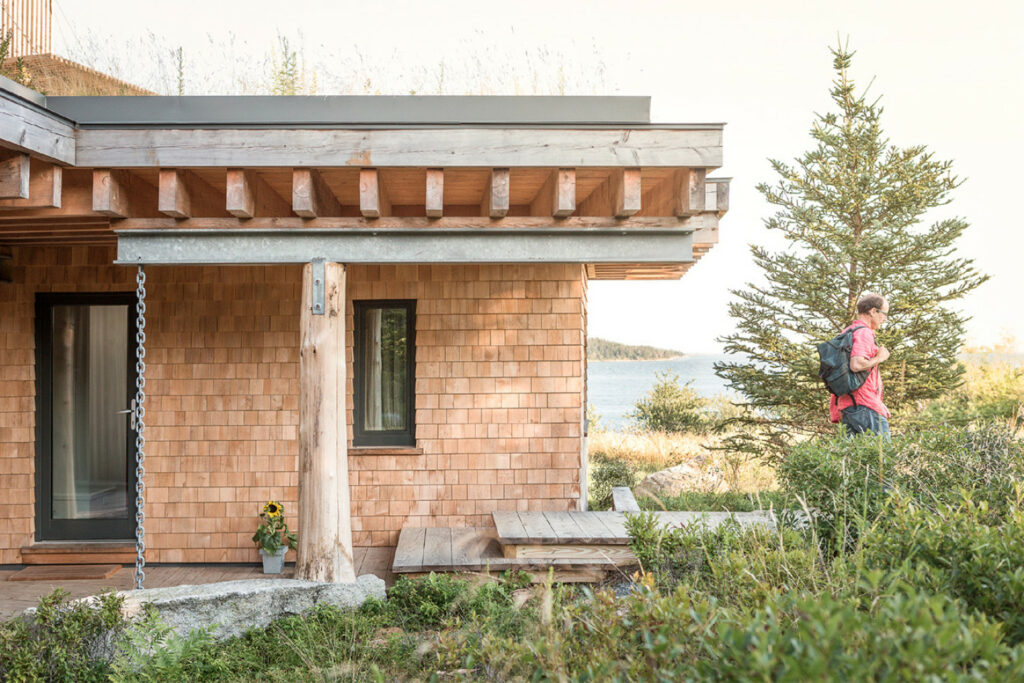
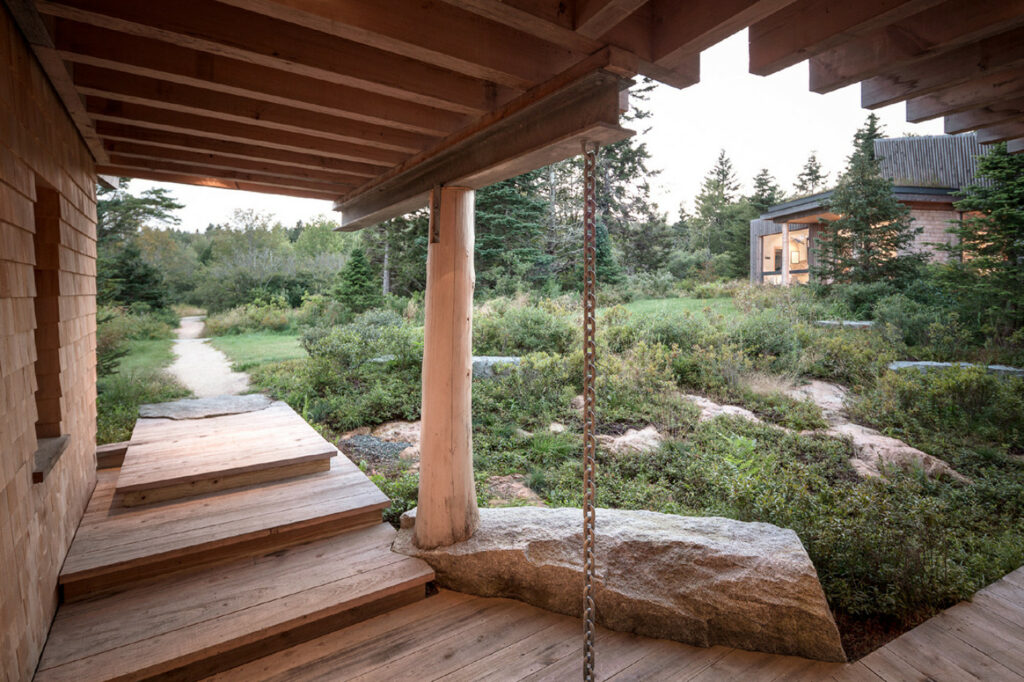
Sustainable and Locally Sourced
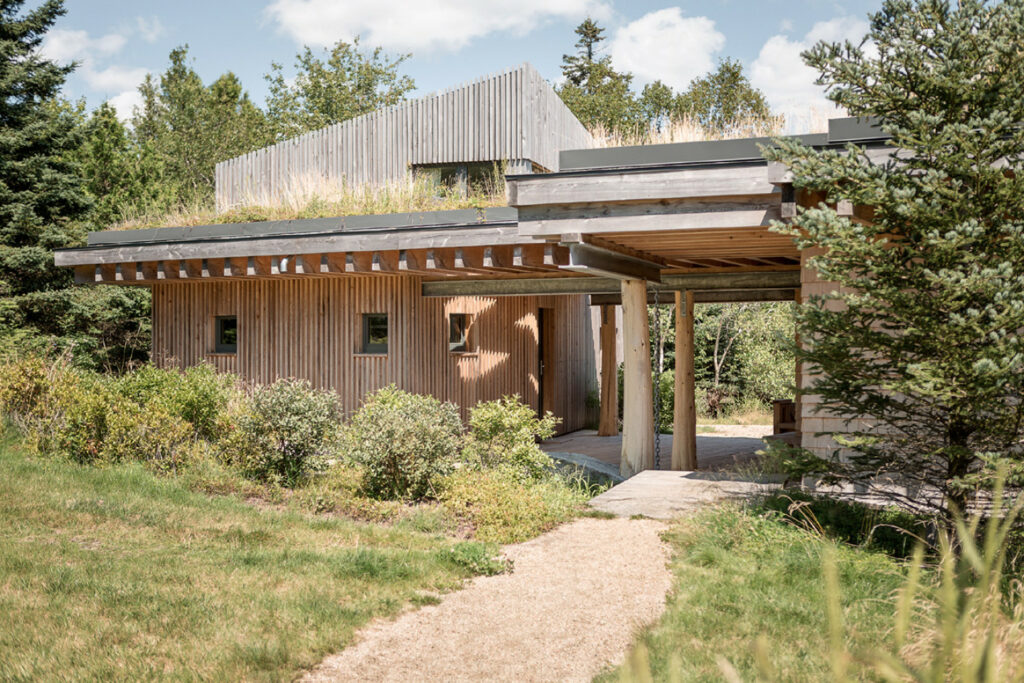
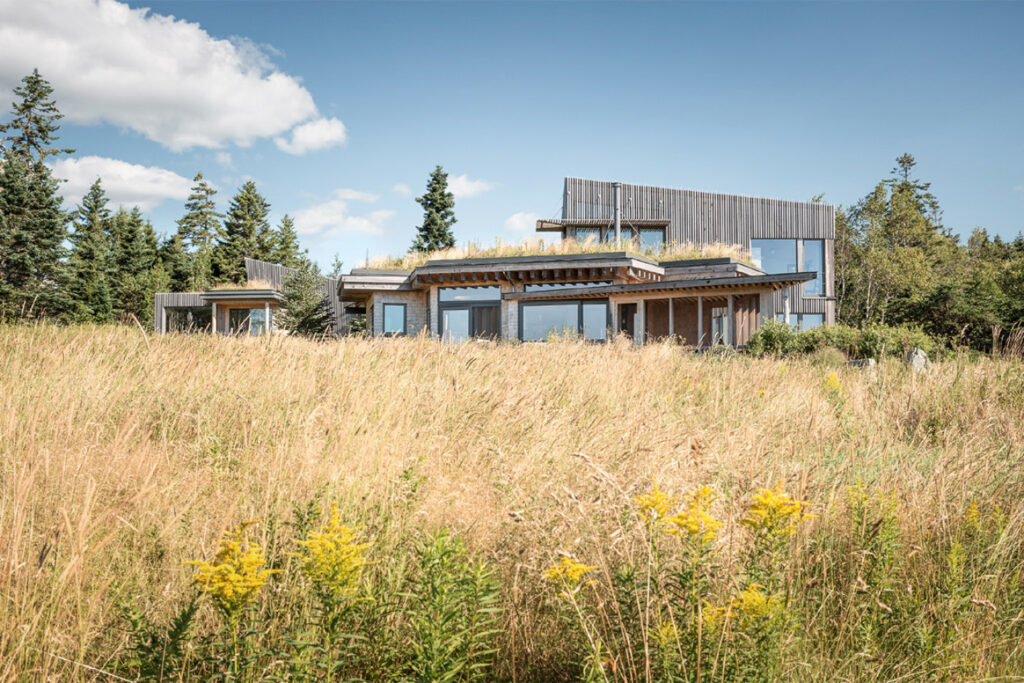
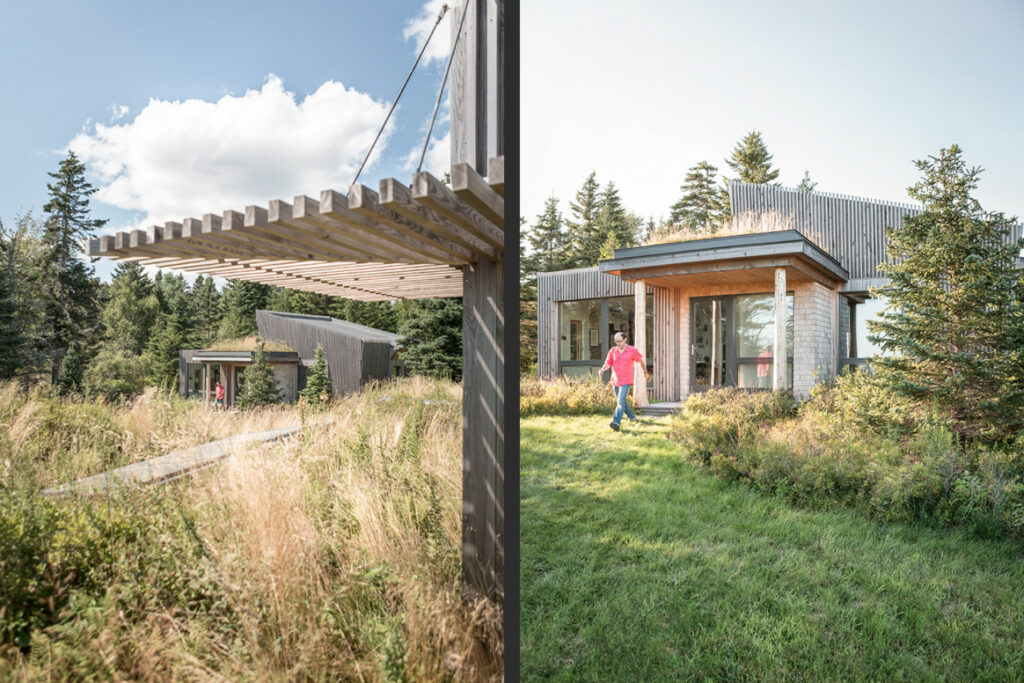
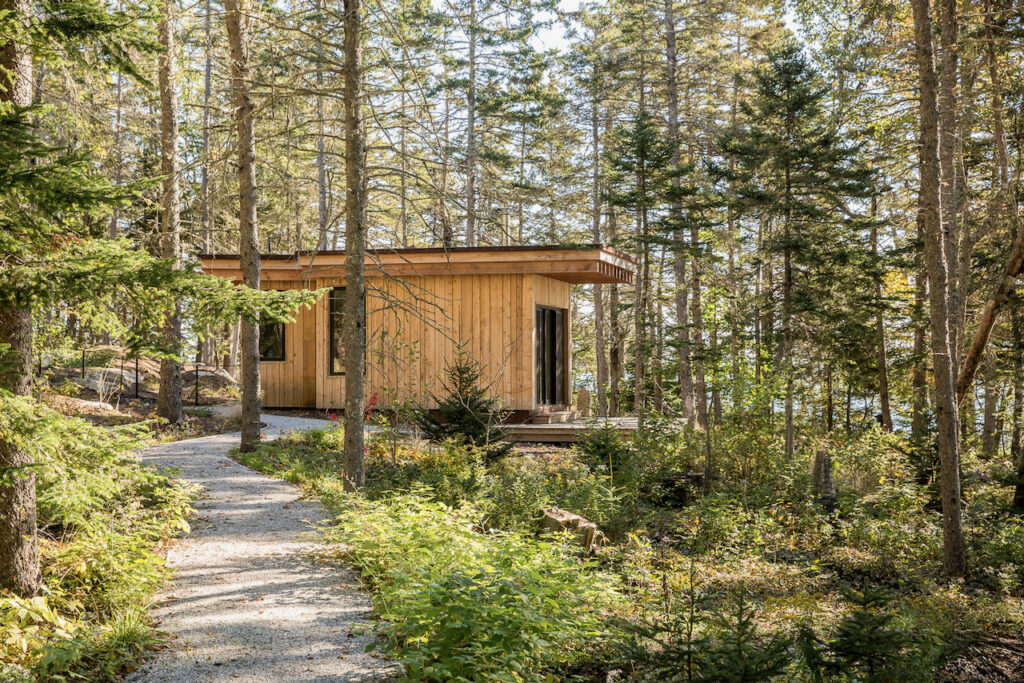
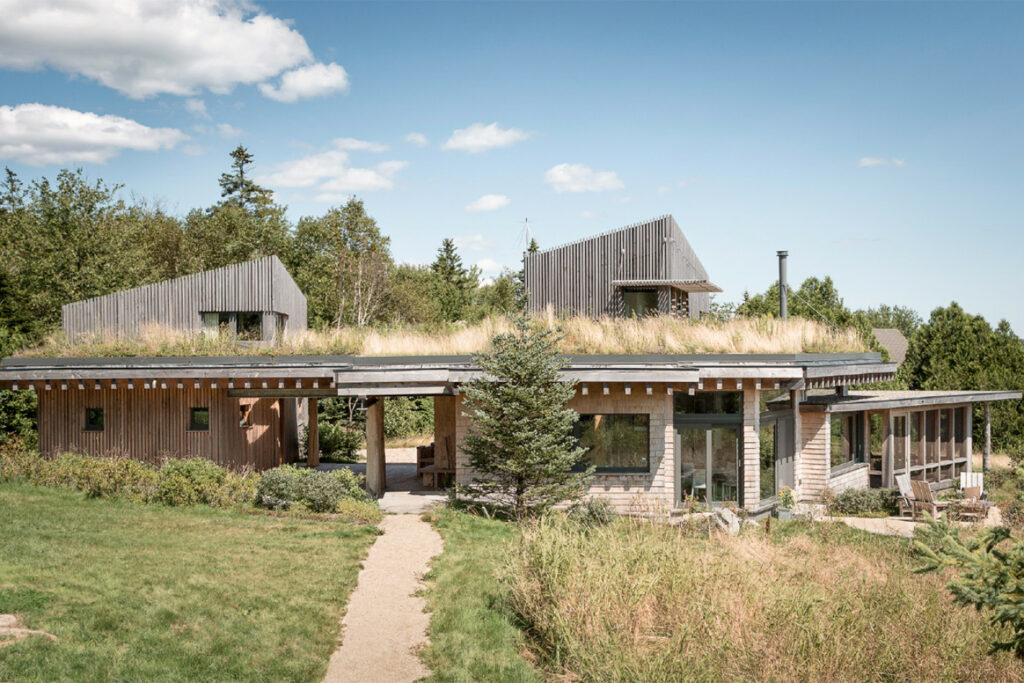
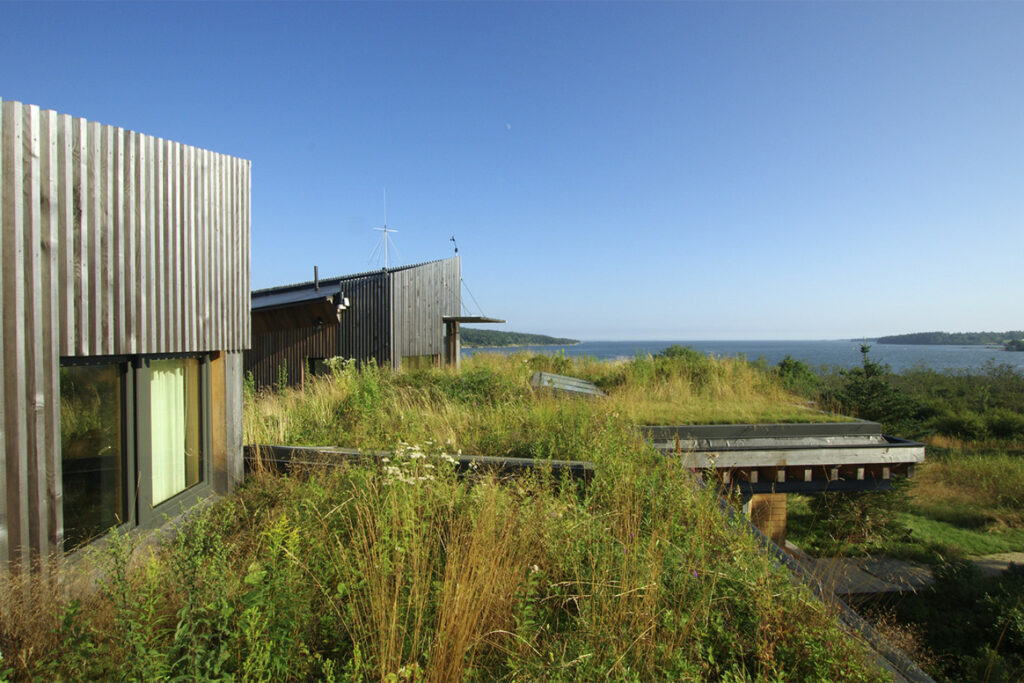
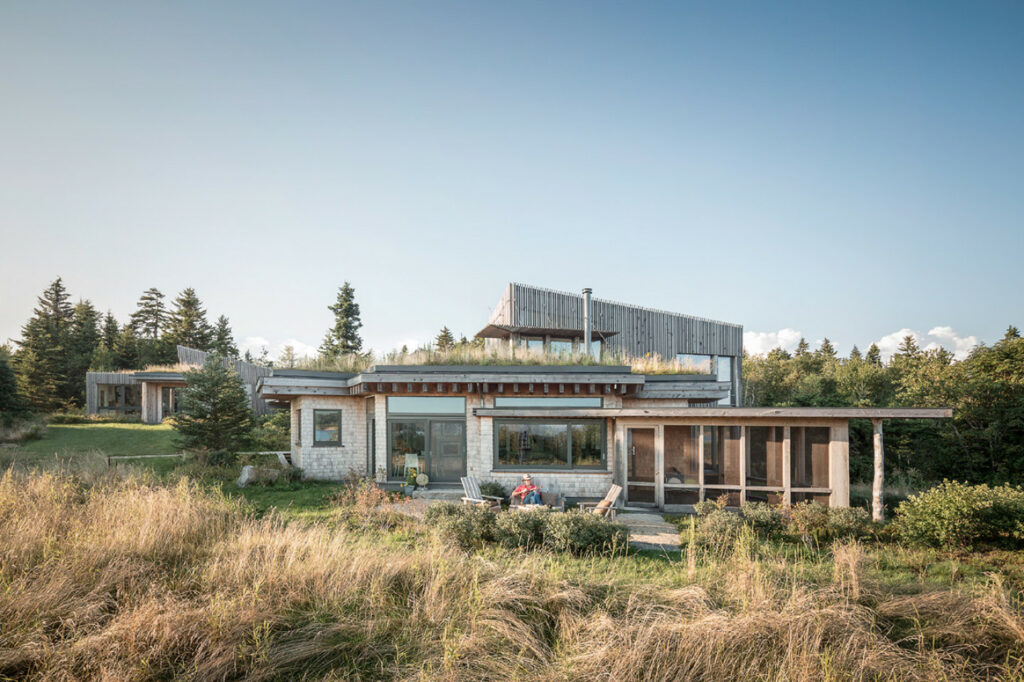
Architecturally the design utilizes two building types. One is a single-story flat-roofed form with exposed timbers covered with a planted roof—a lifted field. The planted roof reinforces the flow of nature over and around the buildings. It also furthers building insulation. The other type is massed from taut, sculpted ‘blocks’ that are simple in shape and assembly but skinned with a deeply textured wooden surface. These are arranged radially, organizing back to the landscaped middle.
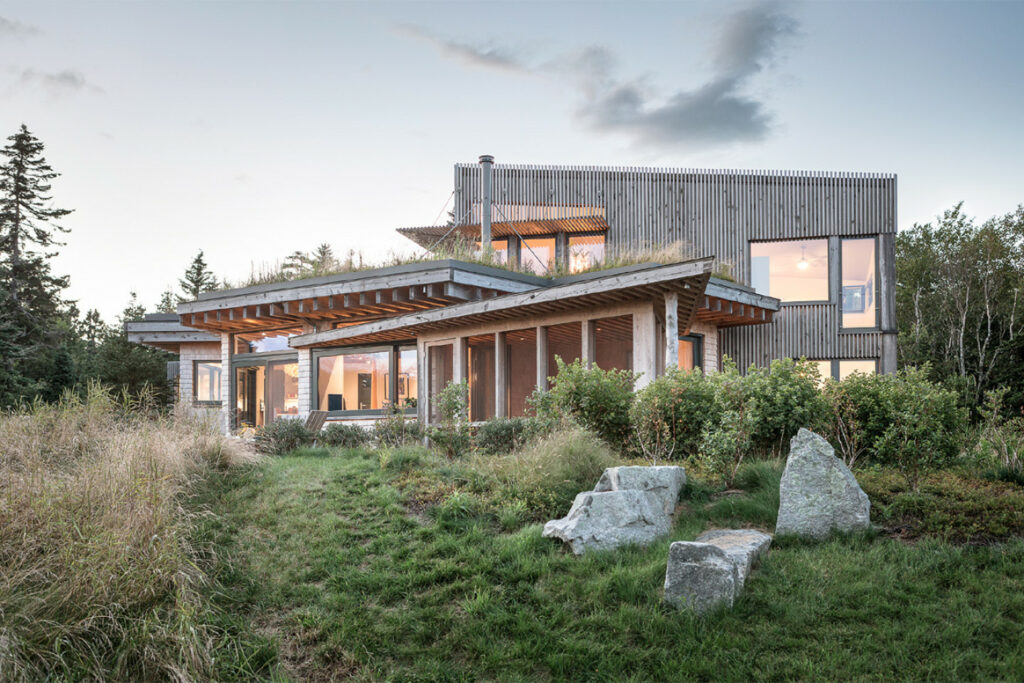
Blurring Boundaries With Nature
The design process was a highly collaborative series of ‘charrettes’ that included the client and landscape architect. The result was a set of 3 modest buildings (the house and studio now built, with a future remote/detached garage planned) that knit into the landscape, not dominate it. The buildings organize as one, together defining a central naturalized courtyard that opens to the south (and view) rolling down into the field.
Minimizing Environmental Impact
Circulation axes and sight lines stitch the buildings together, bridging the landscaped middle. While these axes are defined and framed by building edges and pathways, they always lead and focus through to the landscape, and daylight – a deliberate tie of one’s experience back to nature, blurring the edges between the two.
The Results
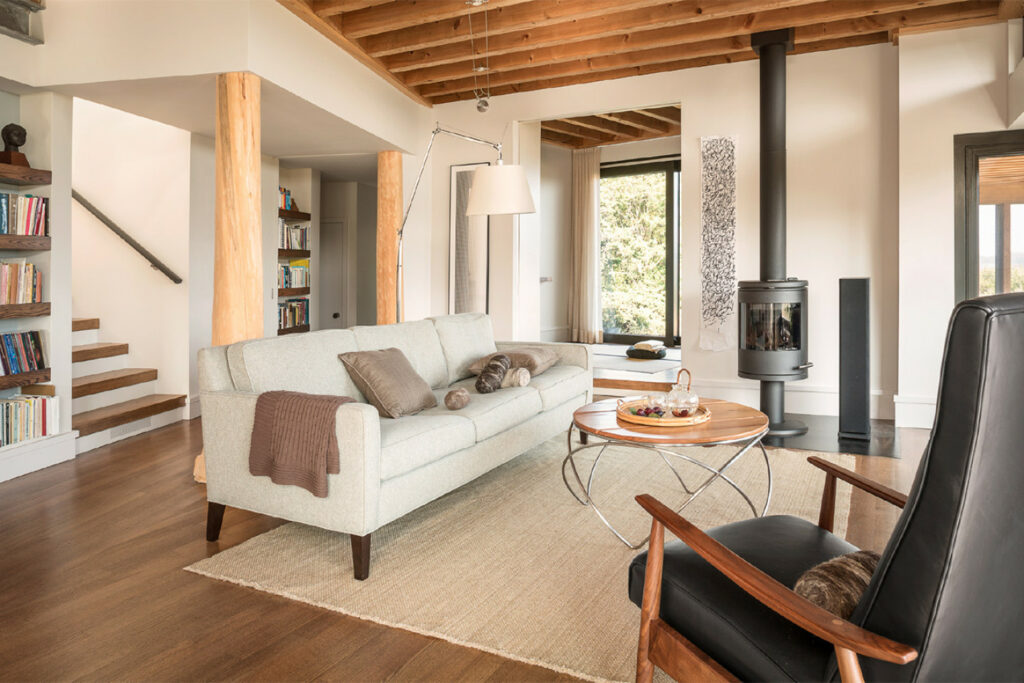
The building exceeds its Net-Zero energy consumption goal using a grid-tied ground-mounted PV array that powers geothermal heat pumps for radiant in-floor heat, high-efficiency appliances, and LED lighting.
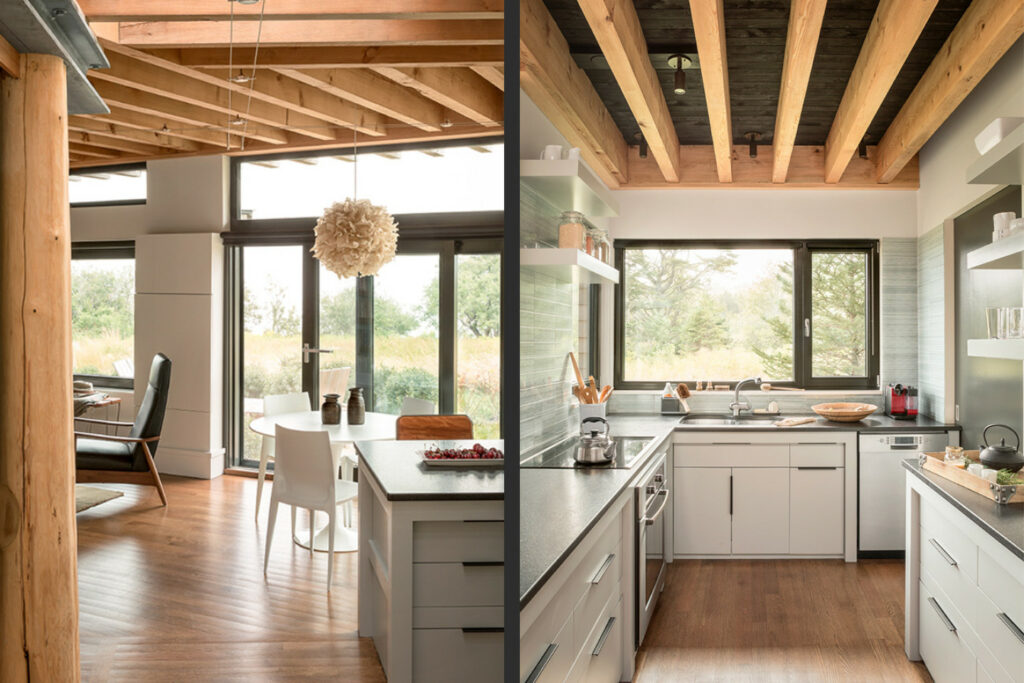
The buildings are super-insulated with close attention paid to detailing to minimize thermal bridging and maintain an extremely air-tight envelope. Triple-glazed, high-performance doors and windows are used. They were sized and located to maximize passive solar gain and minimize heat loss. Passive ventilation is provided for cooling. The house used environmentally friendly, sustainable, recycled, and locally sourced materials wherever possible, as well as low VOC materials.