Whipplewood
PROJECT TAGS
LOCATION
STRUCTURAL ARCHITECTS
BUILDER
PHOTOGRAPHY
Project Team
Cost
Year
The owner of this home met with us shortly after his home had burned down. He wanted to get started quickly on design work for a new home in the footprint of the old cottage, using the opportunity created by this loss to create something that better suited the sloping site and his lifestyle there.
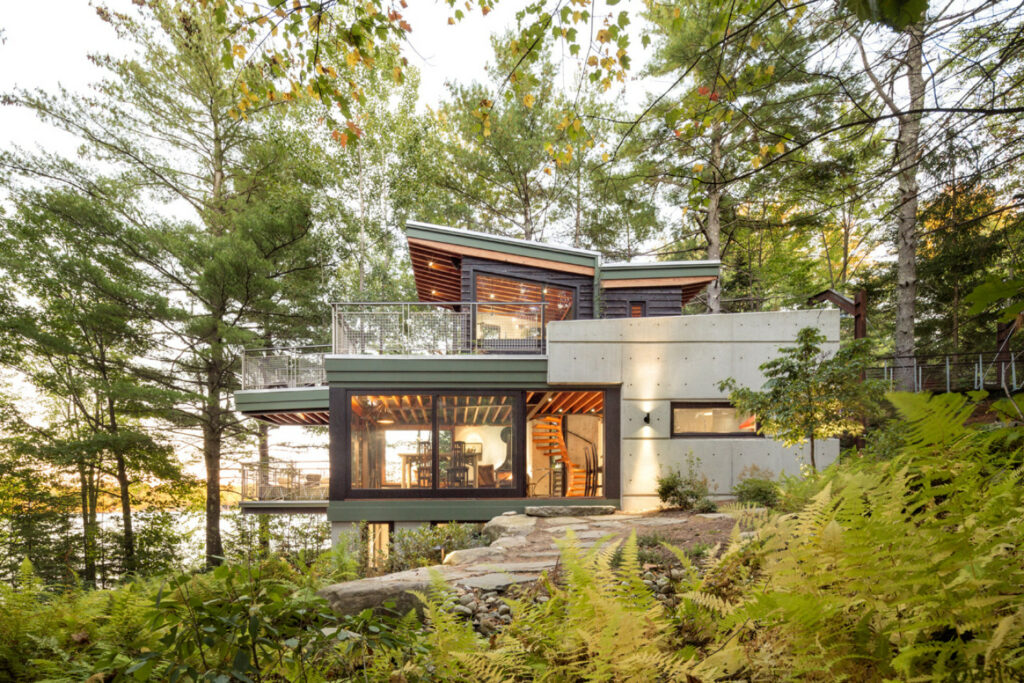
Artist’s home on Watchic Pond integrates concrete, wood and steel with the landscape.

Low-Maintenance Structure Blends With Nature
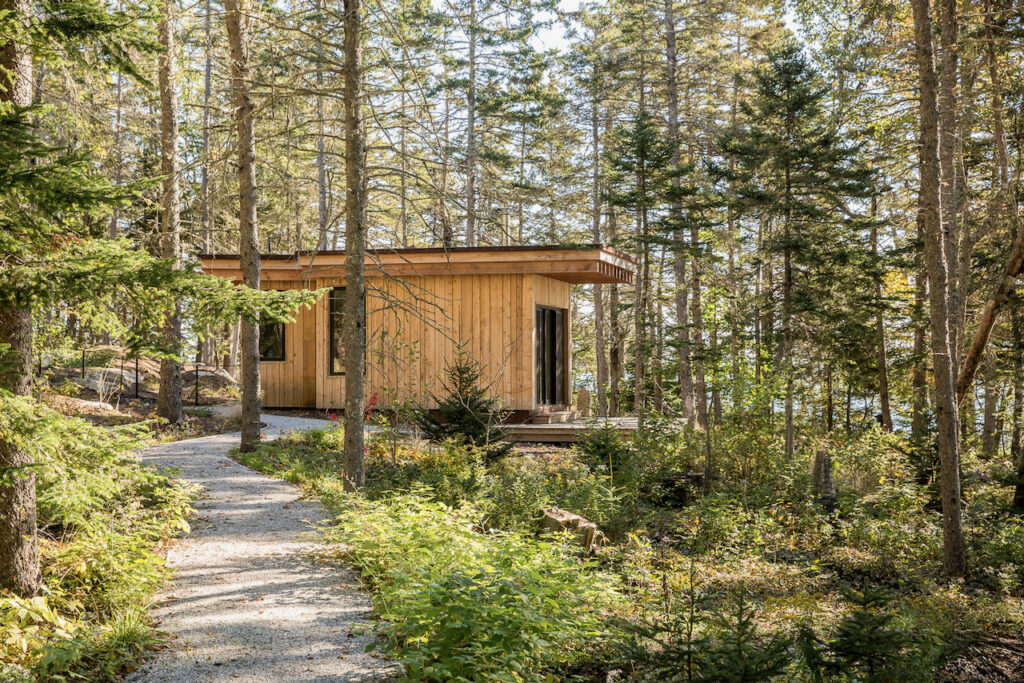
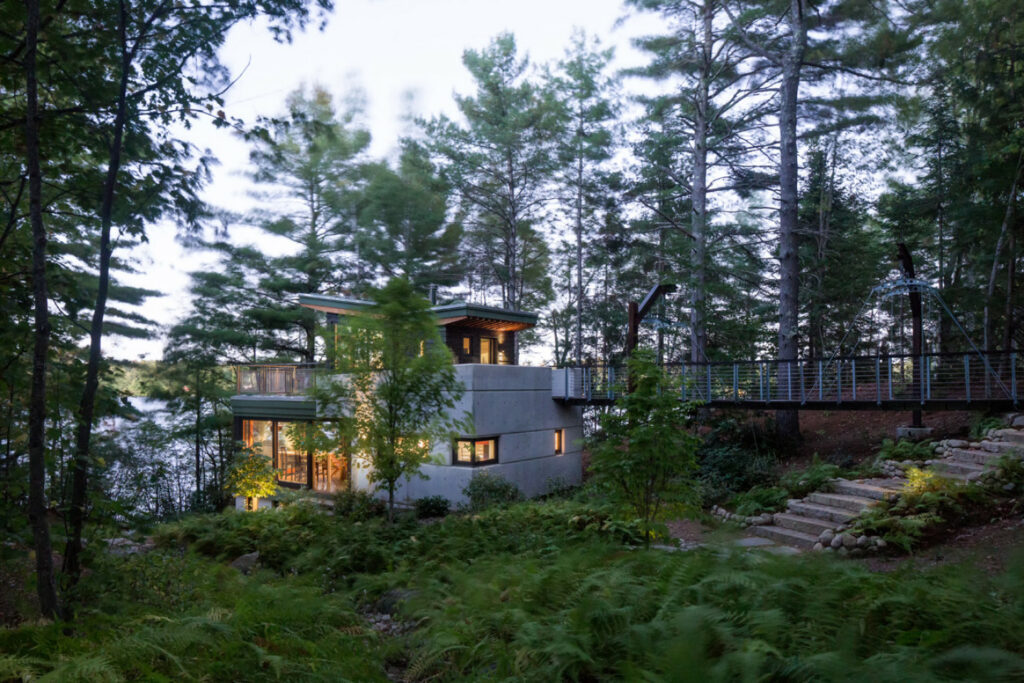
The initial vision of the project was a small, low-maintenance structure that would appear to be something of an extension of the natural landscape. Since the old cottage and the building site were close to the water amongst stands of tall mature trees, integrating into the site and making the most of the views was of critical importance. This proximity to the water also meant that the size of the new structure would be very constrained by zoning regulations.
Integrating Durable Materials
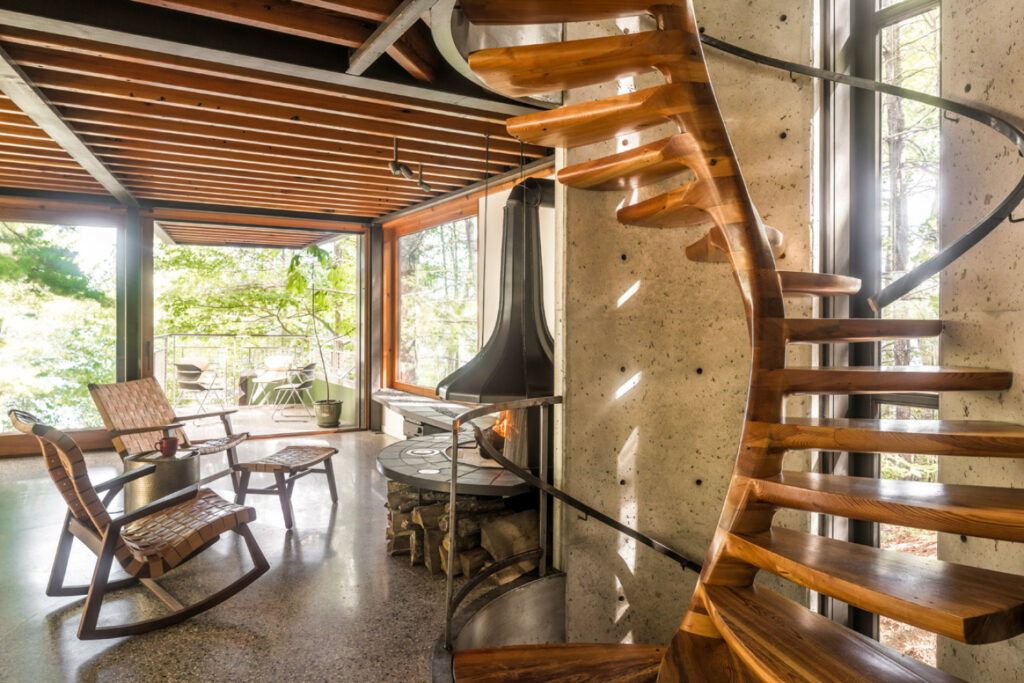
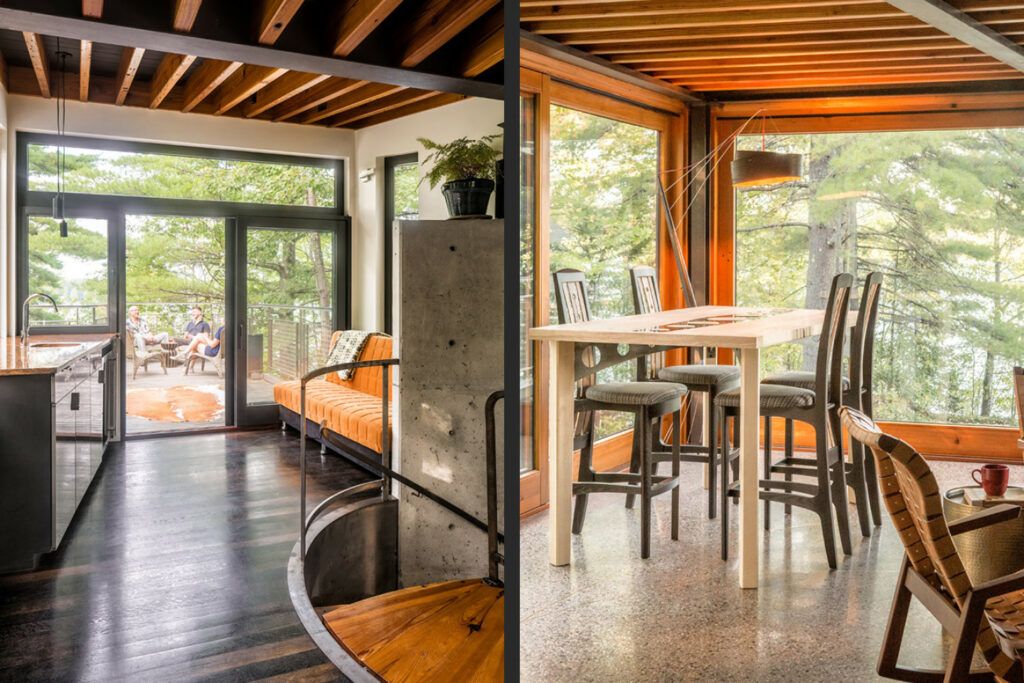
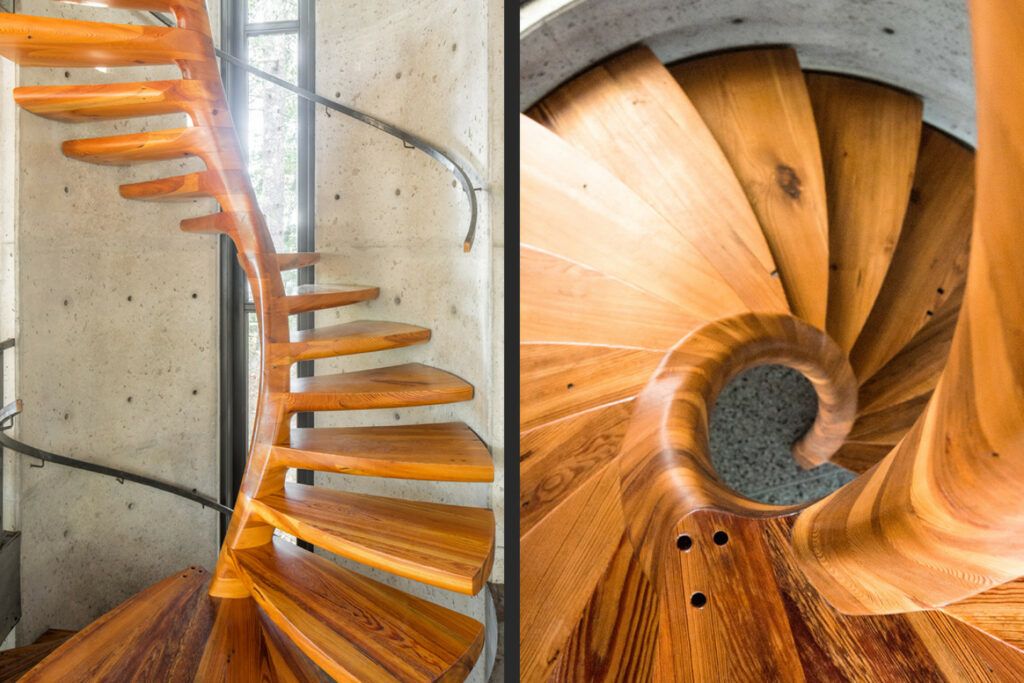
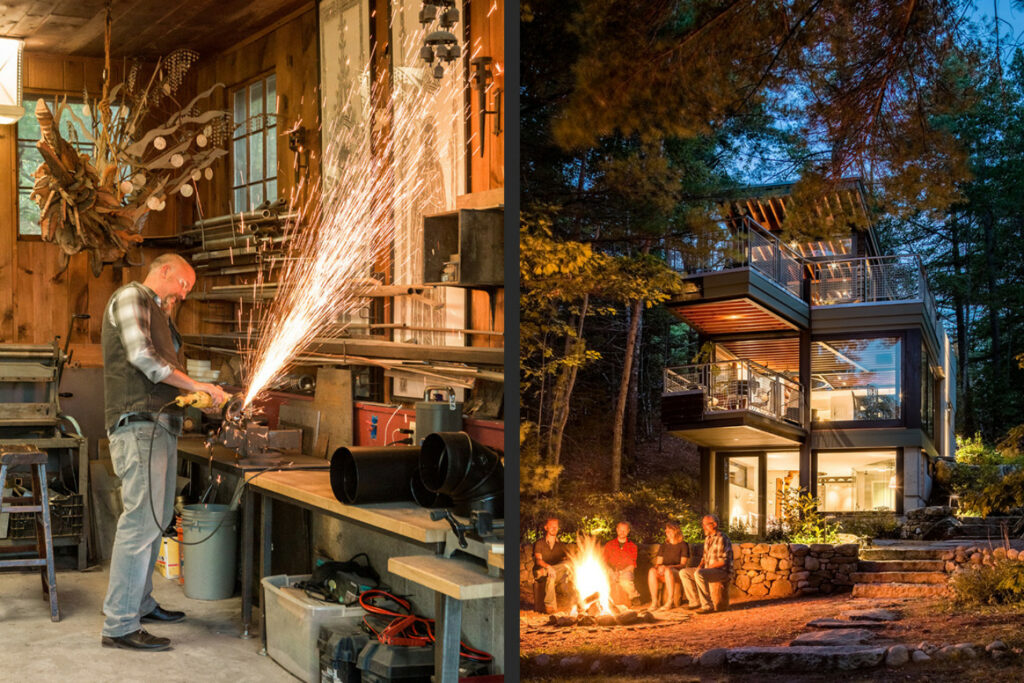
The home features a sculpted concrete base, designed for durability and minimal maintenance, that rises from the hillside and blends into the natural terrain. Steel and reclaimed timbers frame expansive glass panels facing the water, allowing for stunning views while creating a strong, yet organic, connection to the environment. The continuous helical stair is crafted from reclaimed heart pine timbers, adding a touch of handcrafted warmth and sustainability.
Rebuilding With Purpose and Vision
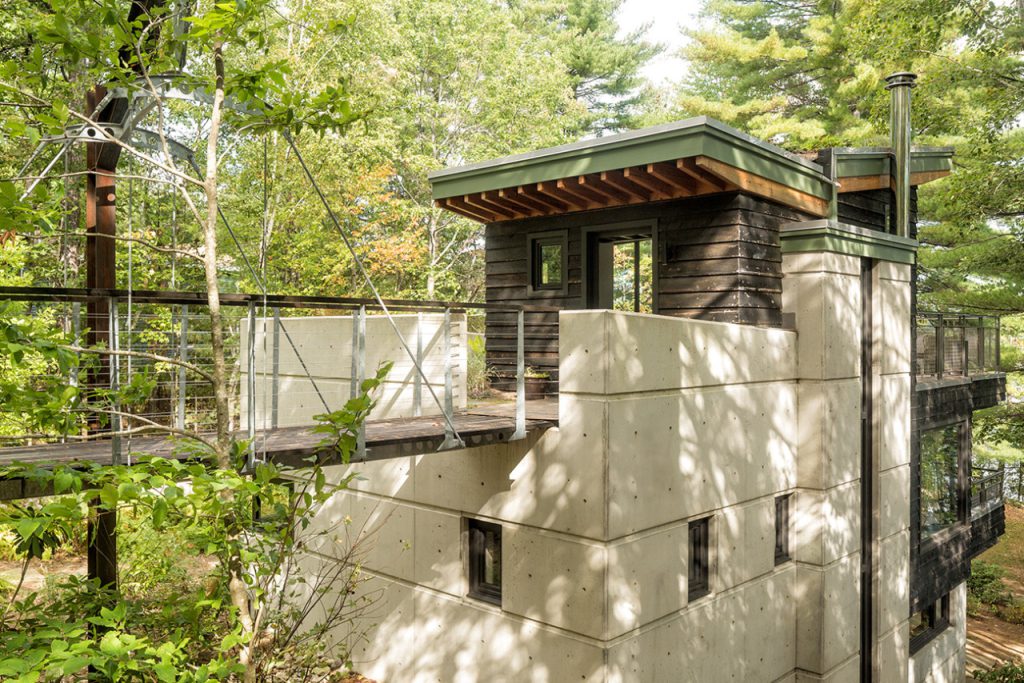
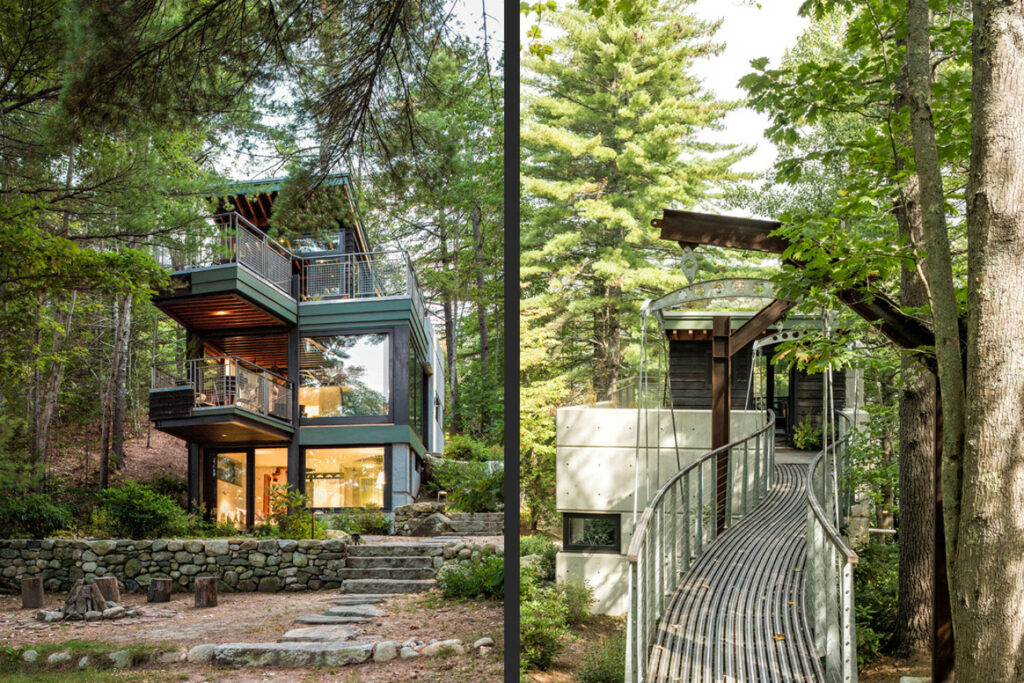
After spending some time on his site, we suggested that the uphill portion of the house should be a sculpted concrete base, anchored to the back of the hillside, and growing out of the ground to be visible to the exterior. This would be durable and maintenance-free and also seemed appropriate given the history of the fire with the old cottage.
More importantly, it would fit the vision of something emerging from the topography of the site while simultaneously being softened and reclaimed by the surrounding vegetation over time. To the water side of this base would be large glass panels set inside a frame of steel and reclaimed timbers, and looking out to the views of the treetops and the lake.
Balancing Zoning Constraints and Vision
The project faced challenges due to the sloping site, proximity to the water, and zoning regulations that constrained the size of the new structure. The design needed to maximize the use of the site’s natural topography while adhering to regulations, which required innovative solutions like the three-story layout and the use of durable, low-maintenance materials that also resonate with the history and landscape of the site.
The Results
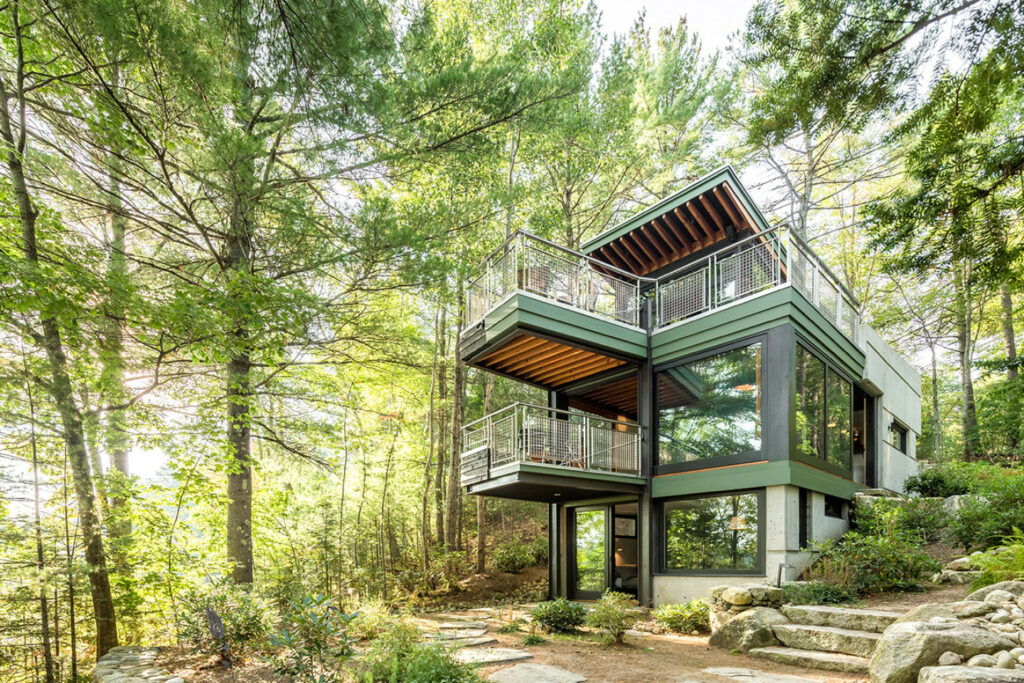
Since the owner lives alone, but entertains often, it made sense that the arrival to the house would be on the upper level, tethered to the back of the hillside, where guests would leave their cars. So, a three-story design emerged, with an entry/mudroom and wet bar at the top, accessible from the parking area via a sculpted footbridge. Beyond this entry room was an open deck and rooftop garden, cantilevered out into the treetops. Guests could arrive, set their things down, and make their way straight out to the deck.
Below this would be the kitchen and main living area with another cantilevered deck, and under that, burrowed into the hillside was the master suite. All three levels were connected by the central jewel of the house; a continuous helical stair, an element that the owner modeled and fabricated from reclaimed heart pine timbers using a combination of CNC machines and hand tools.