Easterling Homestead
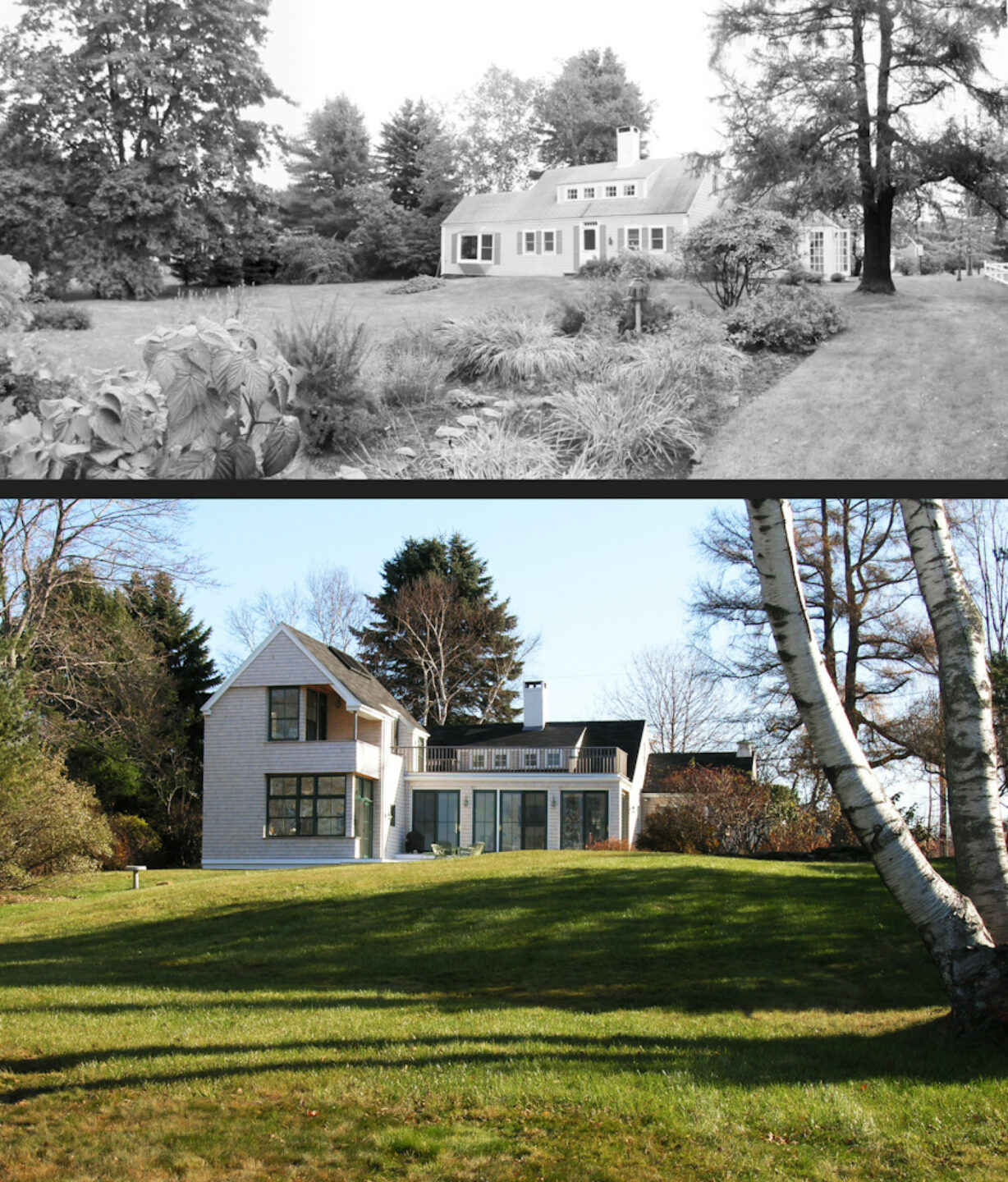
Historically significant, Easterling is one of the oldest existing homes on Peaks Island. Its half-acre, neighborhood lot enjoys protected westerly water views across its landscape and over lower neighbors of Portland harbor.
Project Details
Location:
Peaks Island, Maine
Structural Architects:
Builder:
Lha Builders
Photography:
Darel Bridges, Winkelman
Recognition
Project Requirements
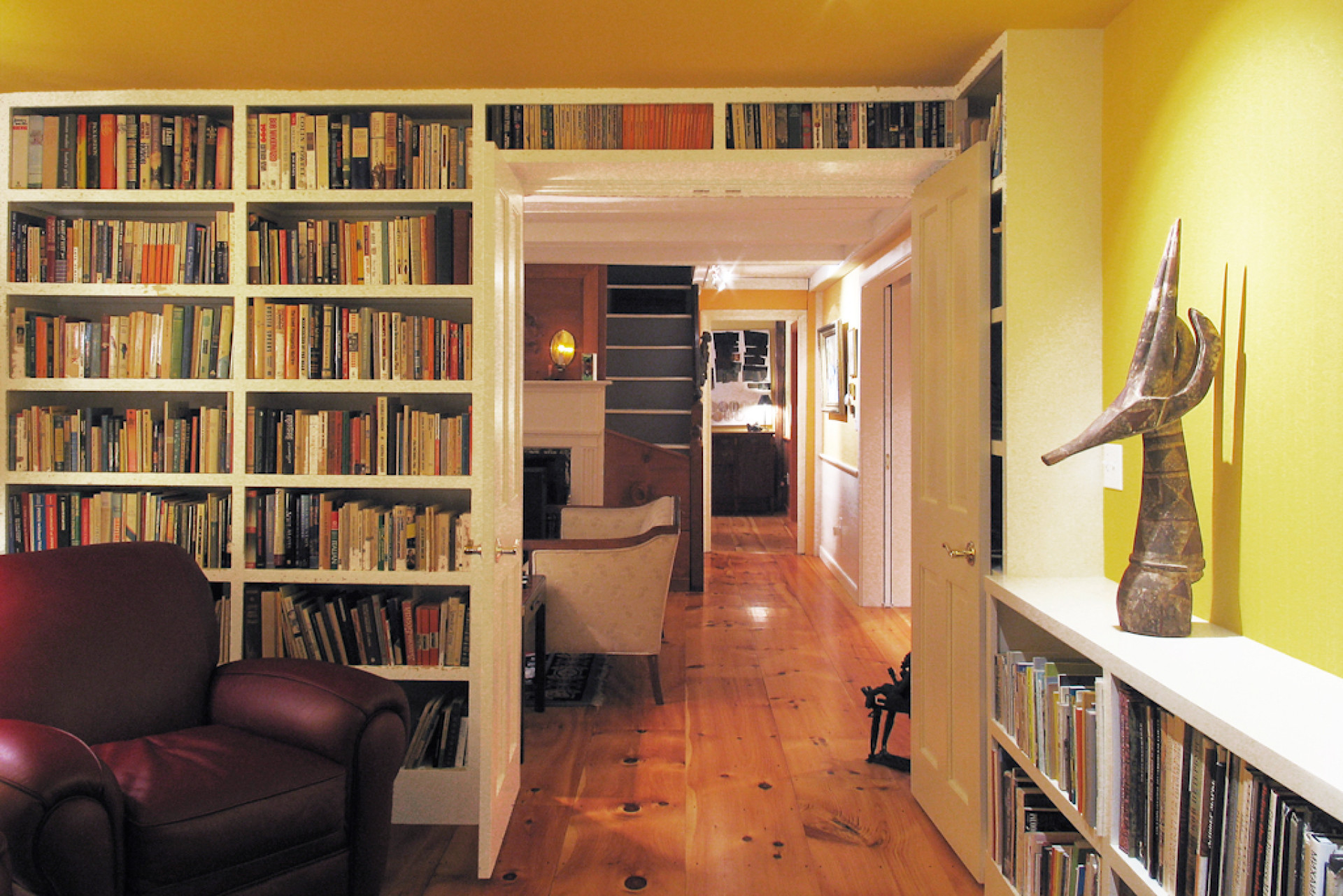
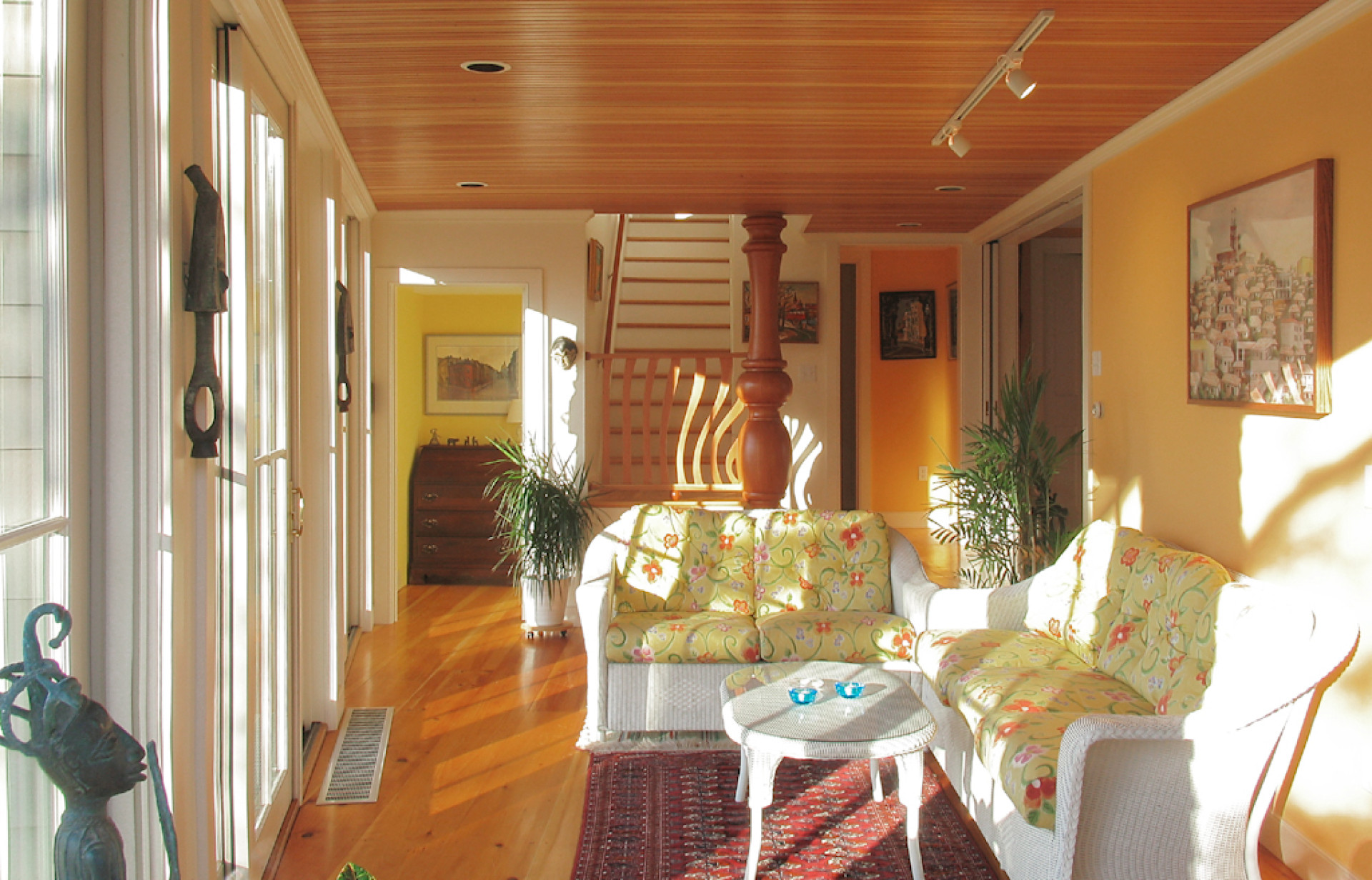
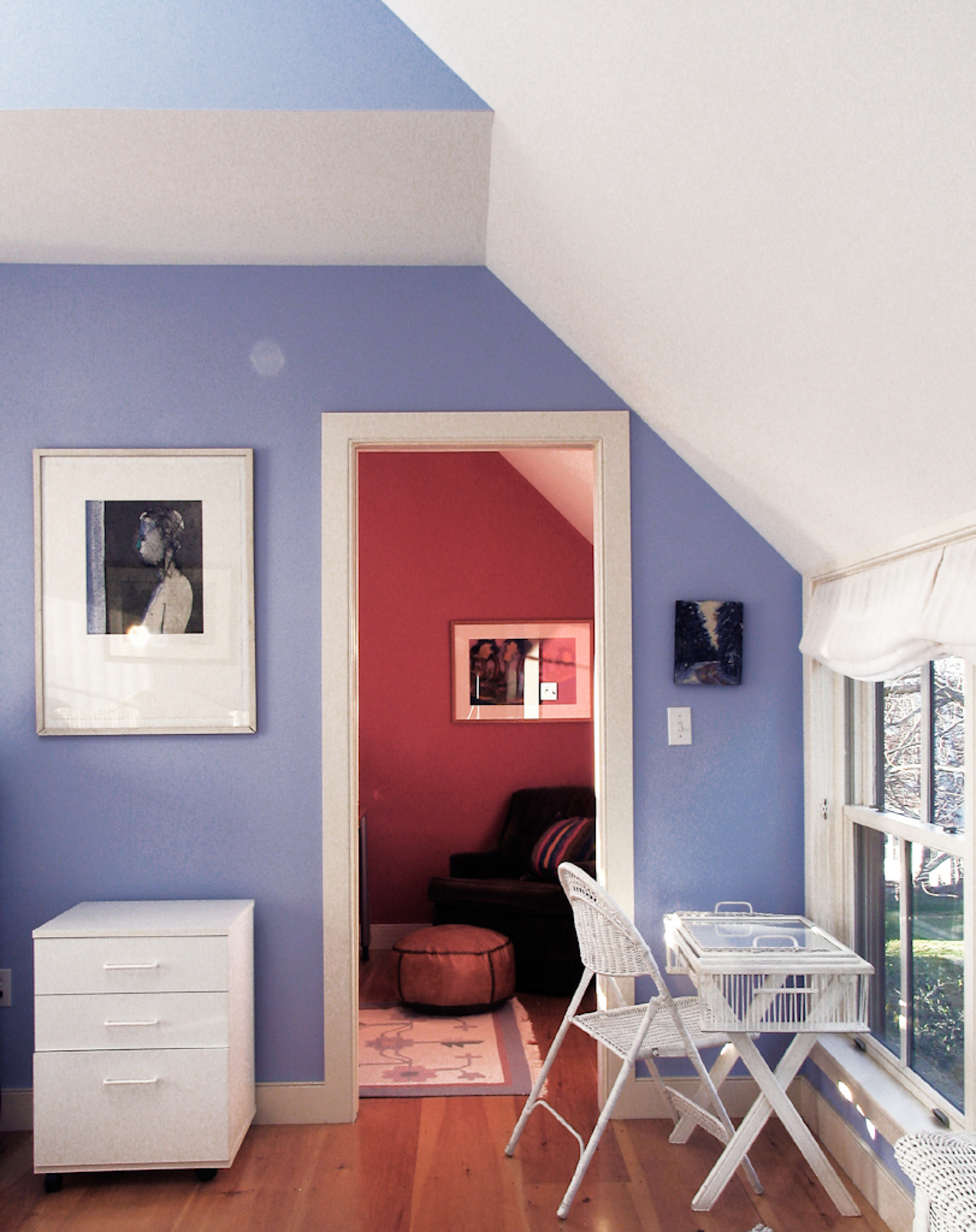
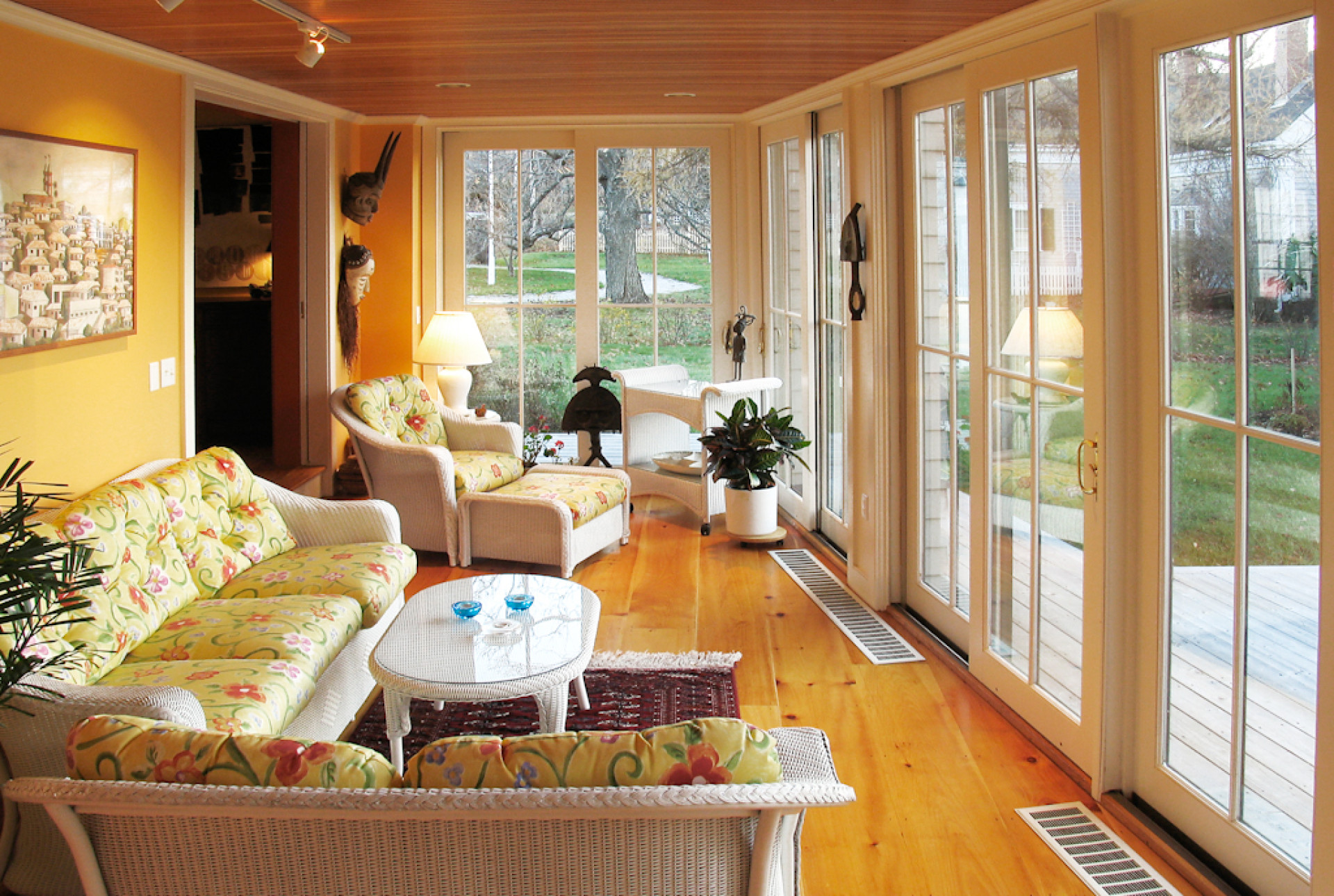
Our single client sought to minimize disruption to the historic structure, leaving substantially unchanged the existing kitchen, dining and partly the living. An addition was desired to house a ‘gallery’ space (informal living), master suite, guest bedroom, office, and private porch.
Design Concepts
Easterling’s existing bathroom resided in the living room, directly adjacent to the fireplace. This was removed and a new front entry with mudroom was created there. This alleviated the kitchen’s entry door from continuing to serve as ‘the’ front door. The new entry opening serves the added purpose of bringing easterly daylight into the original living room.
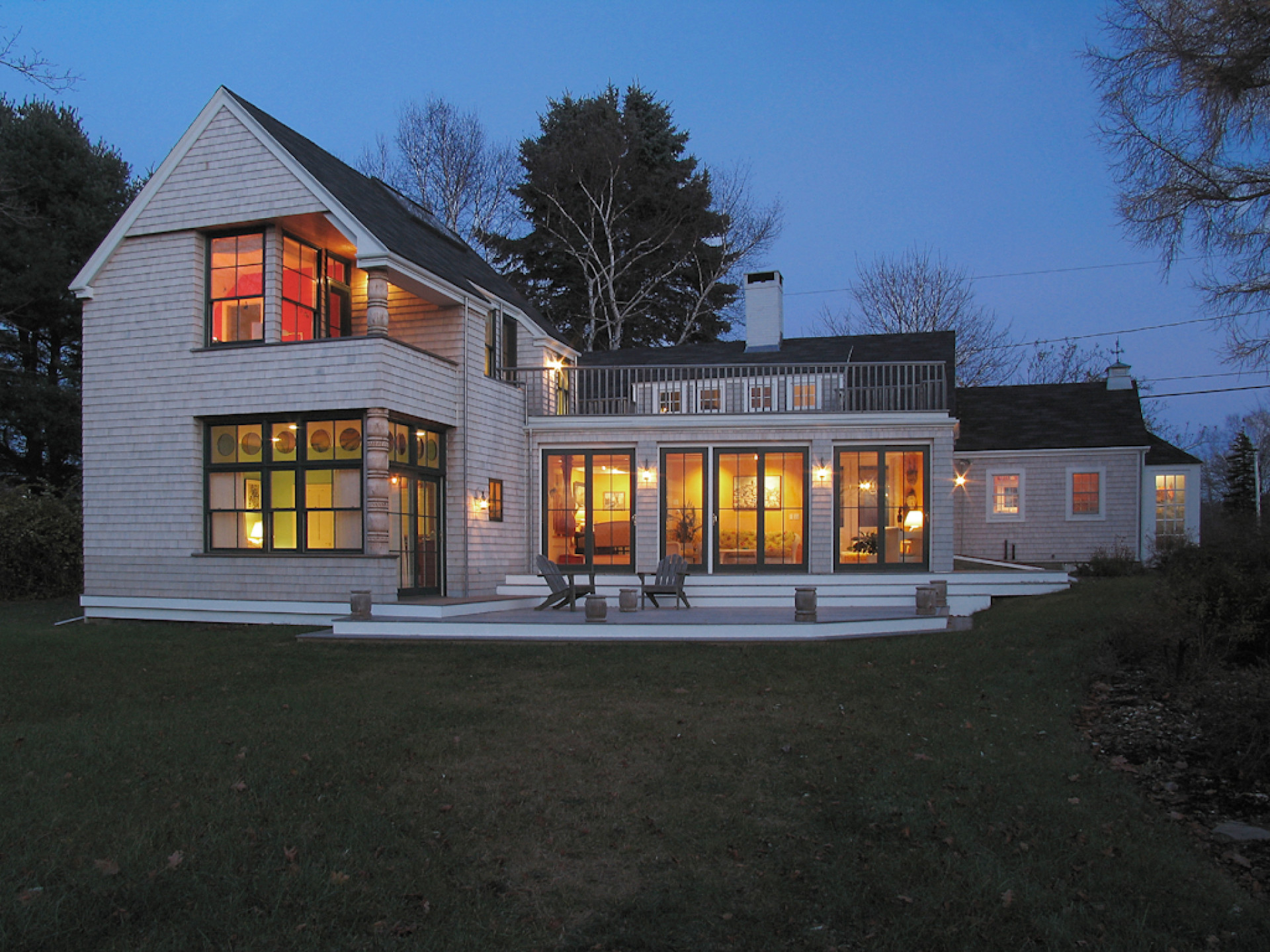
The addition’s mass was kept to the rear, maintaining a mostly undisturbed presence for the existing structure. The addition’s 2-story portion was separated from the diminutive mass of the existing through the use of a flat-roofed bridging form (housing the ‘gallery’), not competing with/ Easterling’s character. It is configured to create a southwesterly-oriented courtyard/deck for outdoor living. The exterior wall of the flat-roofed addition portion (the ‘gallery’) is slightly skewed to reorient the interior space directly to its Portland Harbor views. This also lends an expansiveness to the modest space.
The Results
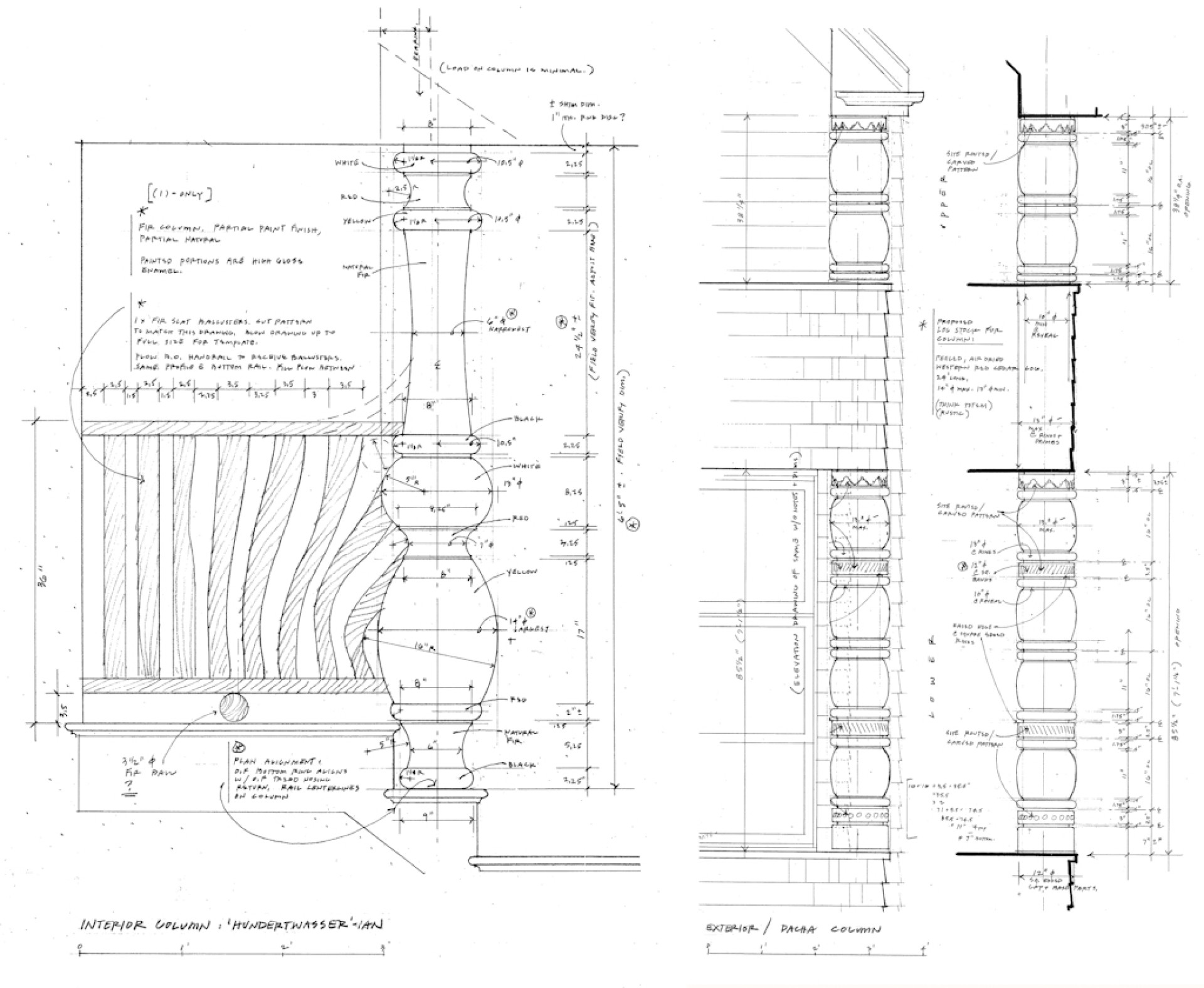
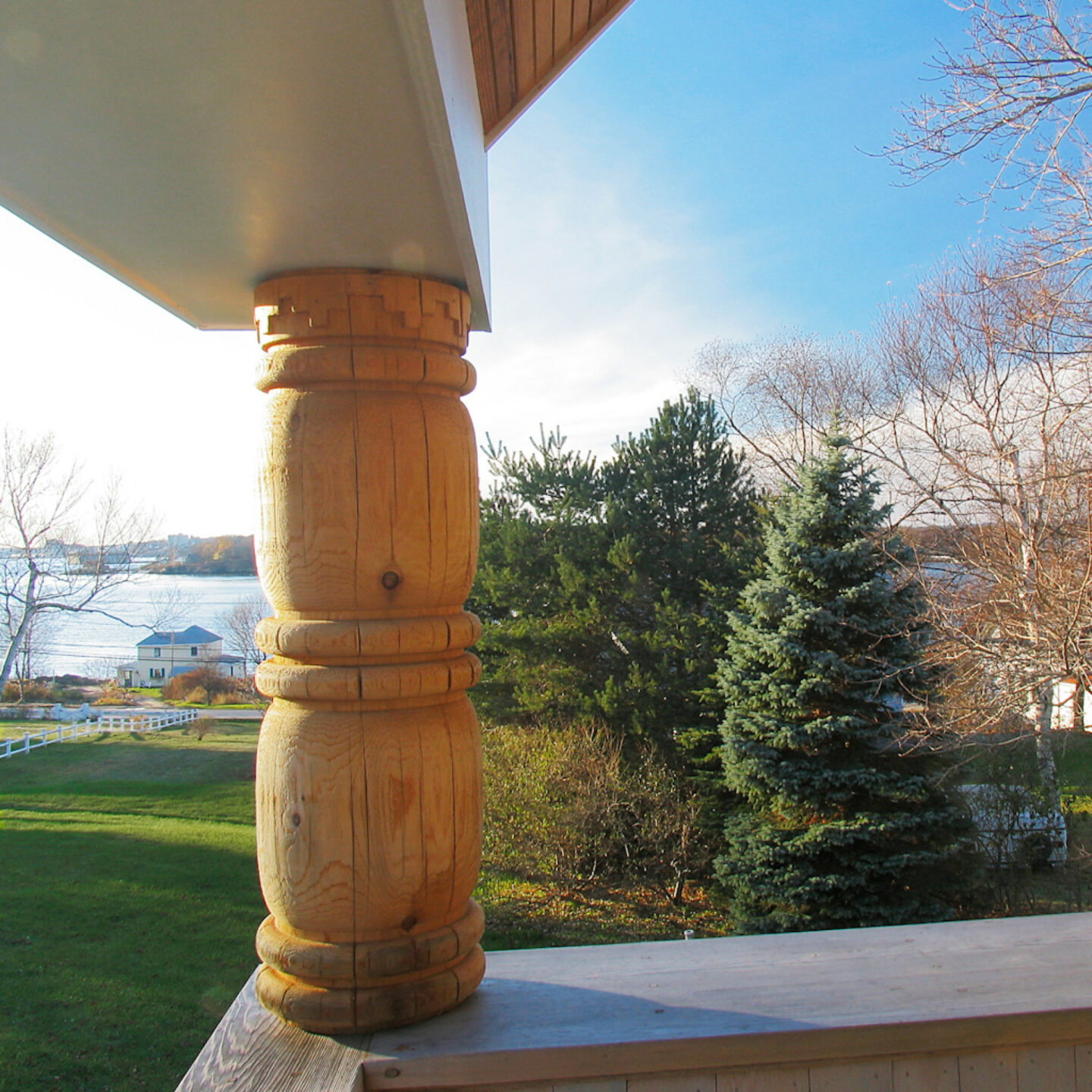
The client had spent much time in Russia and was fond of the character of their summer Dachas. This influenced the idiosyncratic second-floor porch and inspired the creation of the embedded exterior column, reflective of wooden Russian architecture.
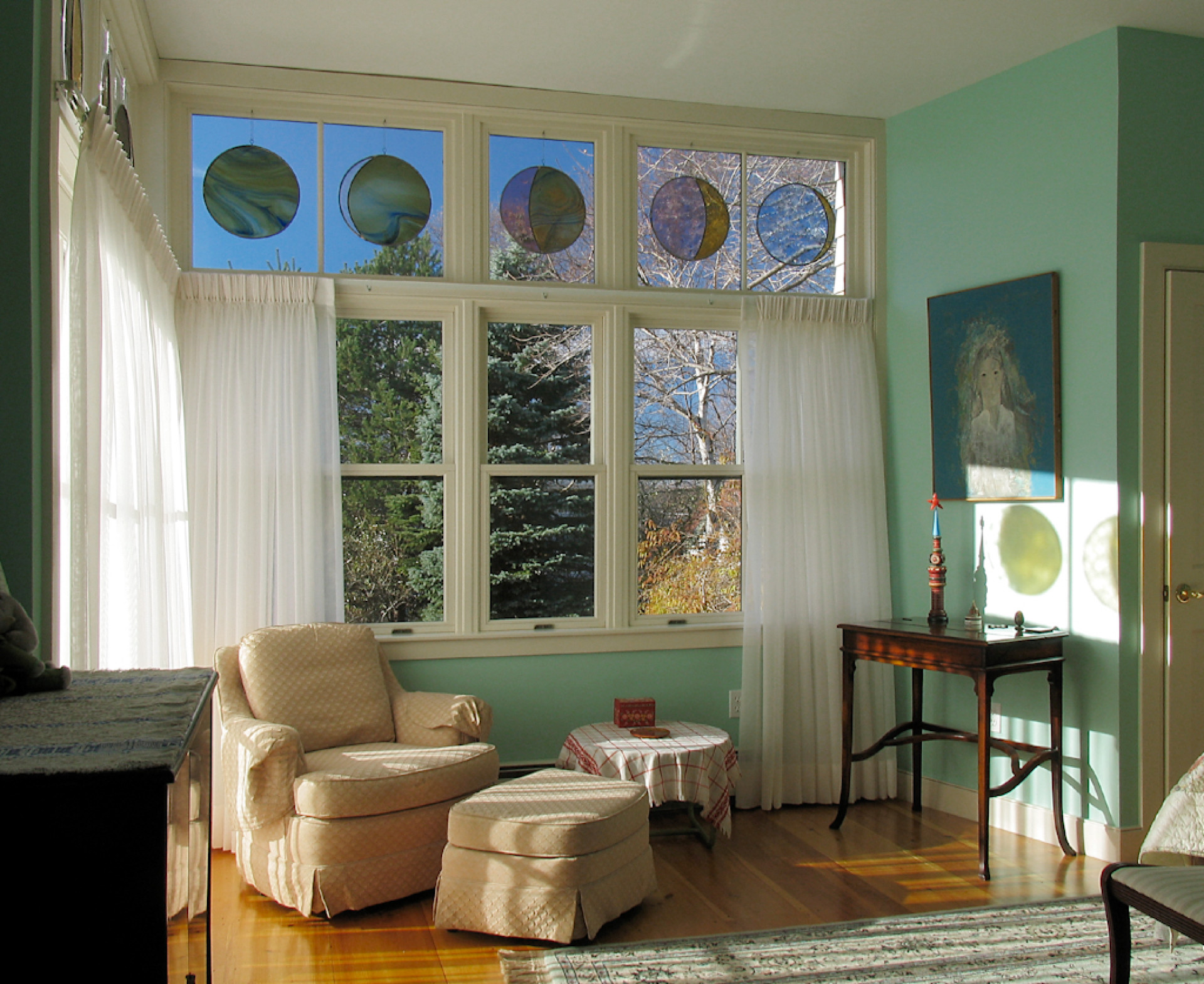
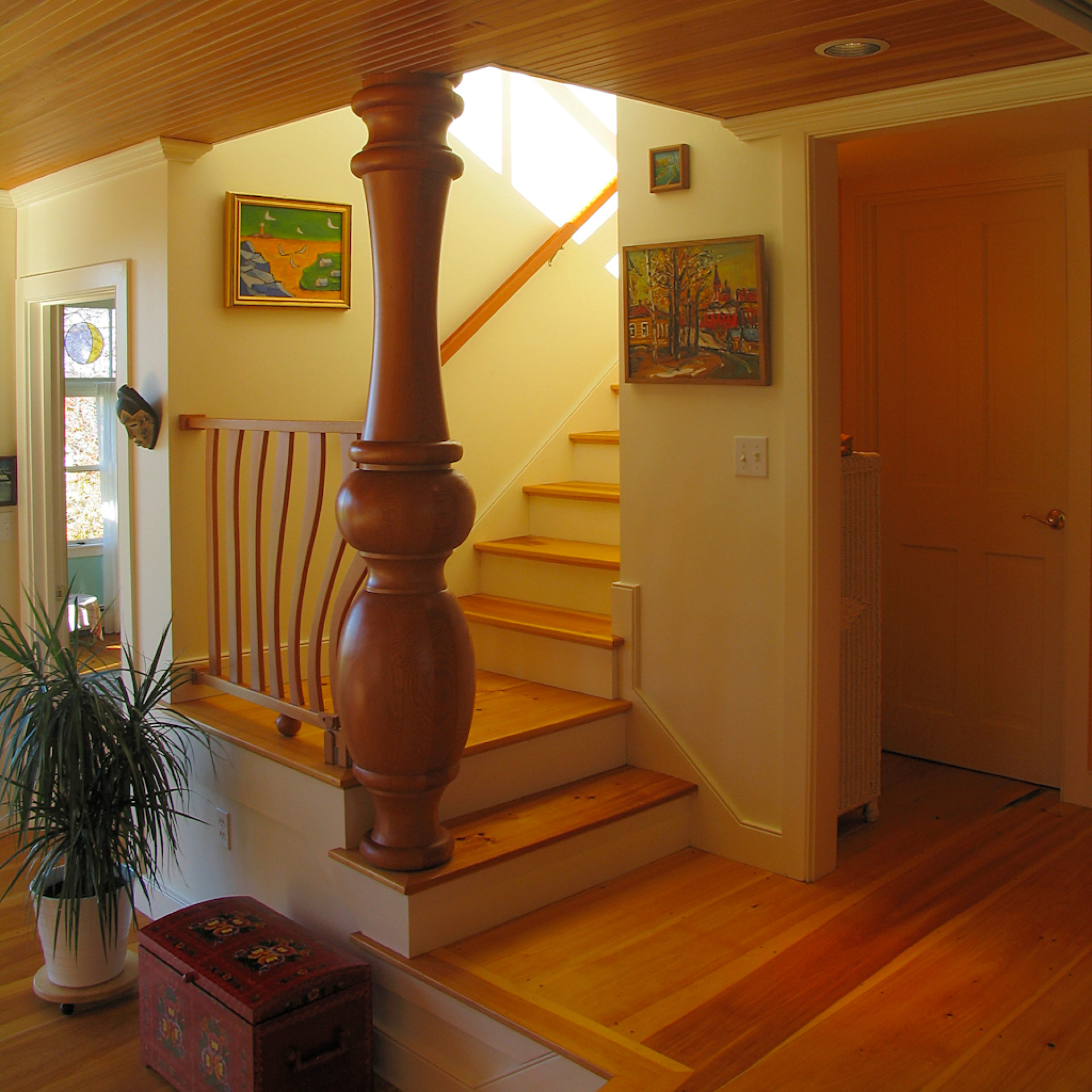
The client also has a wonderful art collection that enriches the interior. Living overseas in Austria, a love of the art and architecture of Friedensreich Hundertwasser (who had a habit of creating unique columns throughout his native Vienna) was nurtured – a fondness shared with this architect. Springing from this, a Hundertwasser-inspired column was created here as structure and art to contribute to the collection.